




How to fold a pocket square without ending up with a bulky lump or a fold that disappears into your jacket pocket? Start by matching the fold to the fabric. Linen holds crisp edges and sharp points, while silk looks better in softer styles such as the puff or reverse puff.
The most polished pocket squares are rarely the most complicated. What matters is how the fold sits in the pocket, how much fabric remains visible and whether the color complements the outfit without copying the tie exactly.
Below, you will learn how to fold a pocket square in nine practical styles, including the presidential, one-point, puff, winged puff and scallop folds, along with tips for choosing the right fabric, preventing slipping and avoiding unnecessary bulk.
Quick Answer
To understand how to fold a pocket square, begin by matching the fold to the fabric. Linen and cotton are best for crisp edges and structured points, while silk and softer blends work better for relaxed shapes such as the puff or reverse puff.
Fold the square until it is slightly narrower than your jacket’s breast pocket, then adjust the bottom to match the pocket depth. Only the finished edge, points or rounded puff should remain visible.
Beginners can start with:
- Presidential fold: Best for tuxedos, formal events and business attire
- Puff fold: Ideal for silk pocket squares and relaxed tailoring
- One-point fold: A versatile choice for weddings and office suits
- Two-point fold: Creates a sharper and more distinctive finish
- Reverse puff: Highlights the colors and borders of patterned fabric
The final fold should look balanced and natural. Avoid forcing the fabric into a stiff shape or creating more volume than the jacket pocket can hold.
Key Takeaways
- Learning how to fold a pocket square starts with choosing a style that suits the fabric and occasion.
- Use linen or cotton for clean edges, flat folds and structured points.
- Choose silk or soft blends for puffs and relaxed shapes.
- Coordinate the pocket square with your tie rather than matching it exactly.
- Keep the visible fabric proportional to the jacket pocket and lapels.
- Remove unnecessary layers when the breast pocket begins to bulge.
- Slightly uneven points often look more natural than perfect symmetry.
- A white linen pocket square is a dependable option for formalwear.
- Make the final height and shape adjustments after placing the square inside the pocket.
What Is a Pocket Square?
A pocket square is a decorative fabric accessory worn in the breast pocket of a suit jacket, tuxedo, sports coat or blazer. Unlike a handkerchief, which is carried for practical use, a pocket square is designed to add color, texture and personality to an outfit.
Pocket squares are commonly made from:
- Linen
- Cotton
- Silk
- Wool
- Silk-wool blends
- Synthetic fabrics
The material plays an important role in how to fold a pocket square. Linen and cotton hold crisp edges and sharp points, while silk and softer blends create smoother puffs and relaxed shapes.
Understanding the fabric before choosing how to fold a pocket square also helps prevent slipping, collapsing and unnecessary bulk inside the jacket pocket.
Pocket Square vs. Handkerchief: What Is the Difference?
A pocket square is worn for style, while a handkerchief is carried for practical use. The pocket square belongs in the jacket’s breast pocket; the handkerchief usually stays in a trouser or inside jacket pocket.
| Feature | Pocket square | Handkerchief |
|---|---|---|
| Purpose | Decorative | Practical |
| Common fabrics | Silk, linen, wool or fine cotton | Absorbent cotton or linen |
| Typical design | Patterns, borders and decorative edges | Simple and washable |
| Where it is carried | Jacket breast pocket | Trouser or inside jacket pocket |
| Used for wiping? | No | Yes |
A thin cotton handkerchief can work as a pocket square, but thick fabric may create too much bulk. Its material will also affect how to fold a pocket square and whether the finished shape stays in place.
What Makes a Pocket Square Look Expensive?
The difference between a cheap-looking fold and a polished one often comes down to how to fold a pocket square for the fabric, jacket and occasion. Clean proportions, controlled volume and thoughtful coordination matter more than the price tag.
- Use linen or cotton for crisp folds and silk for softer puffs.
- Keep the visible fabric low and balanced with the lapels.
- Avoid oversized shapes, stiff points and unnecessary bulk.
- Let puffs and pointed folds remain slightly imperfect.
- Coordinate with the tie or shirt without matching them exactly.
- Check that the borders, stitching and corners look neat.
- Choose how to fold a pocket square based on the material and dress code.
Before You Learn How to Fold a Pocket Square
Before deciding how to fold a pocket square, check the fabric, pocket size and condition of the square. These details affect whether the fold stays sharp, slips downward or creates unwanted bulk.
- Work on a clean, flat surface so the corners are easier to align.
- Measure the jacket pocket and make the finished fold slightly narrower.
- Hide the care label or remove it carefully without damaging the stitching.
- Press linen and cotton lightly, but avoid making the fabric look stiff.
- Handle silk gently and follow its care instructions.
| Material | Best folds | Finished look |
|---|---|---|
| Linen | Presidential, one-point and multi-point | Crisp and structured |
| Cotton | Flat, pointed and winged-puff folds | Clean and versatile |
| Silk | Puff, reverse puff and scallop | Soft and relaxed |
| Wool | Puff and loose pointed folds | Textured and seasonal |
| Silk-wool blend | Puff, reverse puff and scallop | Soft with added structure |
| Synthetic fabric | Simple folds | Depends on thickness |
The material should guide how to fold a pocket square. Structured fabrics hold straight edges and points, while softer fabrics create better puffs and curved shapes.
Pocket Square Size Guide
A pocket square that is too small may disappear into the breast pocket, while one that is too large can leave the jacket looking bulky. The right dimensions make how to fold a pocket square easier and help the finished shape stay in place.
| Material | Recommended size | Best folds |
|---|---|---|
| Lightweight silk | 40–45 cm | Puff, reverse puff and winged puff |
| Silk-linen blend | 35–42 cm | Puff and soft pointed folds |
| Linen | 30–40 cm | Presidential and pointed folds |
| Cotton | 30–40 cm | Flat and pointed folds |
| Wool or tweed | 30–33 cm | Relaxed points and textured puffs |
Treat these measurements as practical starting points. Pocket depth, fabric thickness and jacket construction can all change the ideal fit.
- If the square slips down, widen the base or try a larger size.
- If the pocket bulges, remove a layer or choose a smaller square.
- If the points collapse, use a firmer material.
- If the puff looks stiff, switch to a softer fabric.
Test the square inside the jacket before choosing how to fold a pocket square for the final outfit.
How Much of a Pocket Square Should Show?
Too much fabric can make the breast pocket look crowded, while too little can hide the fold completely. The goal is to show just enough of the pocket square for the shape to look clear and balanced.
When choosing how to fold a pocket square, let the style guide the height. A presidential fold usually needs about 1 centimetre of fabric above the pocket, while puffs and pointed folds can sit slightly higher.
- Lower the square if it draws attention before the jacket.
- Raise it if the fold nearly disappears.
- Reduce the volume if the breast pocket begins to bulge.
- Check the final height while wearing the jacket.
The best way to judge how to fold a pocket square is to view the complete outfit from a few steps away. The square should add detail without overpowering the lapels, shirt or tie.
How to Fold a Pocket Square: 9 Easy Styles
The best fold depends on the fabric, jacket and occasion. This section explains how to fold a pocket square in nine practical styles, from a formal flat fold to softer options for silk and patterned fabrics.
1. Presidential Fold
Best for: Tuxedos, business suits and formal weddings
Best fabric: Linen or cotton
- Lay the square flat.
- Fold it in half from left to right.
- Fold the bottom upward.
- Fold both sides inward until it matches the pocket width.
- Insert it with a narrow horizontal edge showing.
If you are learning how to fold a pocket square for formalwear, this is the easiest place to start. Keep the visible strip low and even.
2. One-Point Fold
Best for: Weddings, office suits and dinner events
Best fabric: Linen or cotton
- Position the square like a diamond.
- Fold the bottom corner up to meet the top.
- Fold the left and right corners inward.
- Fold the bottom upward to fit the pocket.
- Insert it with one centered point showing.
Keep the point short and sharp. An exaggerated peak can distract from the jacket’s lapels.
3. Two-Point Fold
Best for: Business events, weddings and smart-casual outfits
Best fabric: Linen, cotton or lightweight wool
- Place the square in a diamond position.
- Fold the bottom corner upward, slightly beside the top corner.
- Fold both sides inward.
- Fold the bottom upward.
- Insert it with two staggered points visible.
The two points should sit close together and differ slightly in height. This creates a more natural finish.
4. Three-Point Fold
Best for: Celebrations, weddings and evening events
Best fabric: Linen or structured cotton
- Begin with a two-point fold.
- Bring one side corner upward to create a third point.
- Fold the opposite side behind the points.
- Fold the bottom upward.
- Place it inside the pocket and adjust each peak.
A useful rule when practising how to fold a pocket square with several points is to avoid perfect symmetry. Slightly uneven peaks look less mechanical.
5. Four-Point Crown Fold
Best for: Parties, festive weddings and statement tailoring
Best fabric: Linen, cotton or firm wool
- Fold the bottom corner upward and slightly off-center.
- Bring the left corner up to create a third point.
- Bring the right corner up to create a fourth point.
- Fold the sides inward.
- Fold the bottom upward and place it inside the pocket.
Because the fold is already decorative, wear it with a simple tie, shirt and jacket pattern.
6. Puff Fold
Best for: Blazers, cocktail events and relaxed weddings
Best fabric: Silk or silk-wool
- Pinch the center of the square.
- Lift it and allow the fabric to hang.
- Gather the hanging material loosely with your other hand.
- Fold the bottom upward when necessary.
- Insert the loose ends first, leaving the rounded center visible.
For anyone unsure how to fold a pocket square made from silk, the puff is one of the most forgiving choices. Shape it gently and avoid making it perfectly round.
7. Reverse Puff Fold
Best for: Patterned squares, evening wear and creative tailoring
Best fabric: Silk or lightweight cotton
- Pinch the center and lift the square.
- Gather the hanging fabric into a loose bundle.
- Turn the bundle upside down.
- Fold the rounded section behind the corners.
- Insert it with the loose corners facing upward.
Arrange the corners at different heights. This fold works especially well when the fabric has colorful borders or contrasting edges.
8. Winged Puff Fold
Best for: Weddings, modern suits and business-casual outfits
Best fabric: Cotton, linen or a structured blend
- Position the square like a diamond.
- Fold the top corner down to the bottom.
- Bring the left and right corners down to the same point.
- Fold both sides inward.
- Fold the bottom upward and insert it with the central point showing.
This is a useful next step after learning how to fold a pocket square in basic pointed styles. Do not flatten the side curves, because their soft shape creates the “wings.”
9. Scallop Fold
Best for: Formal dinners, weddings and date nights
Best fabric: Silk, linen or a soft blend
- Fold the square diagonally into a triangle.
- Leave the two corners slightly offset.
- Fold the triangle diagonally again.
- Turn the curved layered edges upward.
- Fold the sides and bottom inward to fit the pocket.
Allow the curved edges to sit naturally. A contrasting border helps define the scallop without adding unnecessary volume.
Once you understand how to fold a pocket square for different fabrics and occasions, choosing the right style becomes much easier. Use structured materials for points and flat folds, and reserve softer fabrics for puffs and curved shapes.
Pocket Square Fold Comparison
| Fold | Difficulty | Best material | Best for |
|---|---|---|---|
| Presidential | Very easy | Linen or cotton | Black tie and business |
| One-point | Easy | Linen or cotton | Weddings and office wear |
| Two-point | Easy | Linen, cotton or wool | Business and smart casual |
| Three-point | Easy to moderate | Structured fabric | Celebrations and evening events |
| Four-point crown | Easy to moderate | Linen, cotton or wool | Parties and festive weddings |
| Puff | Very easy | Silk or silk-wool | Blazers and cocktail events |
| Reverse puff | Easy | Silk or lightweight cotton | Patterned squares and evening wear |
| Winged puff | Easy to moderate | Cotton, linen or blends | Weddings and modern suits |
| Scallop | Easy to moderate | Silk, linen or blends | Formal dinners and weddings |
Choose Your Fold in 15 Seconds
Not sure how to fold a pocket square for your outfit? Use this quick guide:
- Tuxedo: Presidential fold
- Conservative office: Presidential or one-point fold
- Formal wedding: Presidential, one-point or two-point fold
- Outdoor wedding: Puff or winged puff
- Blazer without a tie: Puff or reverse puff
- Patterned silk: Puff, reverse puff or scallop fold
- Crisp white linen: Presidential or pointed fold
- Subtle styling: Presidential fold
- Decorative border: Reverse puff or scallop fold
- Bold statement: Three-point or four-point crown fold
How to Match a Pocket Square With Your Outfit
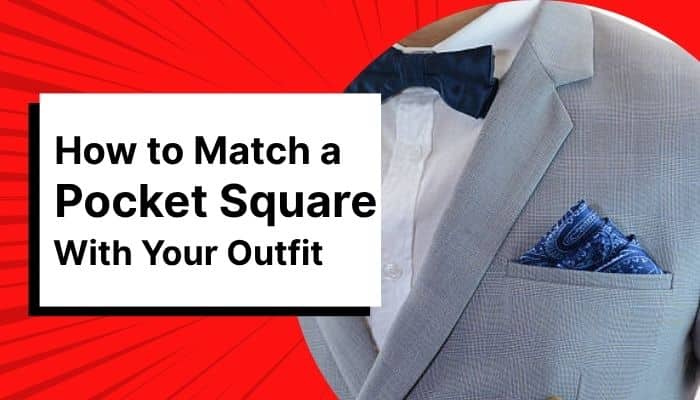
Learning how to fold a pocket square matters, but the color and pattern determine whether it actually works with your outfit. Aim for coordination rather than an exact match with the tie.
- Match one accent color: Repeat a secondary shade from the tie, shirt or jacket.
- Avoid identical sets: A matching tie and pocket square can look overly arranged.
- Balance patterns: Pair a patterned tie with a simple square, or a solid tie with a patterned square.
- Use white for formalwear: White linen or cotton works well with navy, charcoal, black and brown jackets.
- Consider the jacket: Navy suits suit white, burgundy or light blue; brown jackets pair well with cream, green or rust.
- Choose the fold last: Decide how to fold a pocket square after selecting the fabric, colors and dress code.
How to Wear a Pocket Square Without a Tie
An open-collar jacket can still look polished when the pocket square is kept relaxed and understated. The shirt, jacket and fabric should guide how to fold a pocket square when no tie is present.
- Choose a puff, reverse puff or loose one-point fold.
- Coordinate with the shirt or jacket rather than matching either exactly.
- Use one restrained pattern or texture for visual interest.
- Keep the fold low if the shirt or jacket already has a bold design.
- Pair a navy blazer and white shirt with a burgundy silk puff.
- Decide how to fold a pocket square based on the outfit’s level of formality.
How to Keep a Pocket Square From Slipping
A pocket square usually slips when the base is too narrow, the fabric is too soft or the fold does not fit the pocket. Adjusting how to fold a pocket square can help it stay in place without creating bulk.
- Widen the base so it rests against both sides of the breast pocket.
- Fold the bottom upward once more for extra support.
- Use structured linen or cotton for pointed folds.
- Choose silk for puffs and softer shapes.
- Make the final height adjustment after placing it inside the jacket.
- Use a hidden pocket-square holder only when necessary.
- Reconsider how to fold a pocket square if it keeps sinking, twisting or rising out of the pocket.
Pocket Square Troubleshooting Guide
Problems with how to fold a pocket square usually come from using the wrong fabric, creating too many layers or making the base narrower than the jacket pocket.
- The square keeps falling: Widen the base, add one supporting fold or use a larger square.
- The pocket looks bulky: Remove a layer, simplify the fold or choose a smaller square.
- The points collapse: Switch to linen, cotton or another structured fabric.
- The puff looks stiff: Use lightweight silk or a softer blend.
- The fold rises out of the pocket: Shorten the base and reduce its thickness.
- The points look too perfect: Adjust them to slightly different heights.
- The pattern is hidden: Rotate the square before folding so the best section faces outward.
- The square slides sideways: Make the finished base closer to the full width of the pocket.
- Too much fabric is visible: Push the square lower and reduce its volume.
- The shape changes during wear: Choose how to fold a pocket square according to the fabric—structured folds for linen and cotton, softer folds for silk.
Common Pocket-Square Folding Mistakes
Small mistakes can make an otherwise good fold look bulky, stiff or poorly coordinated. When deciding how to fold a pocket square, avoid these common problems:
- Matching the tie exactly: Repeat one color instead of using the same fabric and pattern.
- Showing too much fabric: Keep the fold low enough that it does not compete with the lapels.
- Ignoring the material: Use linen or cotton for structured folds and silk for softer puffs.
- Creating too much bulk: Remove unnecessary layers if the breast pocket begins to stretch.
- Making every point identical: Slight differences in height create a more natural finish.
- Forgetting the pocket depth: Test the fold inside the jacket before finalizing its height.
- Leaving the care label visible: Tuck it behind the fold or remove it carefully.
- Using it as a handkerchief: Carry a separate handkerchief for practical use.
- Choosing the wrong fold: Base how to fold a pocket square on the fabric, jacket and occasion.
A Simple Pocket-Square Formula for Any Outfit
A polished combination starts with the outfit, not the accessory. Before deciding how to fold a pocket square, choose the jacket, shirt and tie, then use the square to connect those elements without copying them.
- Choose your jacket and shirt.
- Add a tie if the dress code calls for one.
- Select a pocket square that repeats one color from the outfit.
- Avoid matching the tie’s exact fabric and pattern.
- Match the fold to the material—structured for linen, softer for silk.
- Adjust the width and depth to fit the breast pocket.
- Make the final height adjustment while wearing the jacket.
- Simplify the shape if it looks bulky or overly prominent.
The easiest way to judge how to fold a pocket square is to view the complete outfit from a few steps away. It should add interest without becoming the first detail people notice.
How to Clean and Store a Pocket Square
Proper care preserves the fabric, color and shape, making how to fold a pocket square easier the next time you wear it. Always follow the care label, especially for silk or hand-rolled edges.
- Treat stains quickly without rubbing the fabric.
- Avoid twisting or wringing silk and delicate blends.
- Press linen and cotton from the reverse side using low heat.
- Keep silk away from excessive heat and strong stain removers.
- Allow hand-washed squares to dry flat.
- Store them clean, dry and loosely folded.
- Keep delicate silk away from rough fabrics and sharp accessories.
- Avoid leaving the same fold inside a jacket for long periods.
Good storage also affects how to fold a pocket square later. Deep creases, moisture and heavy pressure can weaken points, flatten decorative edges or make soft fabrics harder to shape.
Conclusion
The right pocket square fold should feel like part of the outfit, not an accessory added at the last minute. The secret to how to fold a pocket square is matching the shape to the fabric, jacket and occasion: crisp linen for structured points, soft silk for relaxed puffs and a clean white fold for formalwear.
Start with the presidential, one-point or puff fold, then experiment with more decorative styles as your confidence grows. Keep the visible fabric balanced, avoid matching the tie exactly and make the final adjustment while wearing the jacket. Once you understand how to fold a pocket square for different materials and dress codes, even a simple fold can make the entire outfit look sharper, more considered and more personal.
FAQs About How To Fold A Pocket Square
1. Can I Fold a Pocket Square the Night Before?
Yes. Prepare simple folds the night before, store the square loosely and reshape it after putting on your jacket.
2. How to Fold a Pocket Square for a Narrow Breast Pocket?
Choose a presidential or one-point fold, bring the sides inward tightly and avoid bulky puffs or multiple thick layers.
3. How to Fold a Pocket Square So the Rolled Edge Shows?
Position the decorative border outward before completing the fold. Reverse puff, scallop and one-point styles display rolled edges particularly well.
4. How to Fold a Pocket Square for Travel Without Deep Creases?
Pack it flat between soft clothing or roll it loosely. Create the final fold after reaching your destination.
5. Should a Patterned Pocket Square Face Up or Down?
Arrange the fabric so the strongest part of the design faces outward in the finished fold. Rotate it before folding when the main pattern or border is hidden.
6. Can You Wear a Pocket Square With a Boutonniere?
Yes, but keep the pocket square low and restrained so it does not compete with the flower on the lapel.
7. Can Two Pocket Squares Be Worn in One Breast Pocket?
They can, but the extra layers often create bulk. One carefully chosen square usually produces a cleaner result.
8. Can You Fold a Pocket Square Without Ironing It?
Yes. Smooth the fabric by hand and use light steam only when the care label permits it. Silk and wool often look better without sharp pressed creases.
The post How to Fold a Pocket Square: 9 Easy Folds That Look Expensive first appeared on Tycoonstory Media.
Source: Cosmo Politian