




Australian business owners are increasingly blurring the lines between their professional commitments and their weekend lifestyles. SUVs have become one of the most popular vehicle choices for both business and personal use. Among the leading options for modern fleet operators is the Ford Everest, which is widely recognised as a rugged, dual-purpose alternative to traditional utility vehicles. As highlighted in a recent look at the Ford Everest’s capabilities, the SUV offers impressive towing performance, a spacious interior, and robust off-road technology. This makes it an excellent foundation for tradespeople, site managers, and lifestyle entrepreneurs who need a reliable mobile workspace during the week and a capable off-road vehicle for family adventures during their downtime. The ability to transition seamlessly between work duties and recreational travel makes it a highly versatile investment.
Upgrading for Utility and WHS Compliance
While a standard SUV is undeniably capable off the showroom floor, using it for commercial purposes introduces strict legal and practical demands. Under Australian Work Health and Safety legislation, any vehicle used for work purposes is legally defined and regulated as a workplace. This applies whether it is a company-owned asset or an employee’s personal vehicle used in a grey fleet arrangement. Consequently, businesses must rigorously assess their fleet to guarantee that every vehicle is entirely fit for purpose.
Employers have a strict duty of care to eliminate or minimise vehicle hazards, as road travel remains one of the key safety considerations for employees who drive as part of their work. Consequently, upgrading your fleet is not merely about improving aesthetics or weekend performance. Sourcing the right accessories for Ford Everest is a strategic way to support mandatory WHS compliance. By upgrading key components, business owners can ensure the vehicle safely handles heavy tools, recovery equipment, and challenging terrain without compromising structural integrity or driver safety. Quality aftermarket components are designed to withstand the demands of regular commercial use.
Key Modifications to Maximise Business Potential
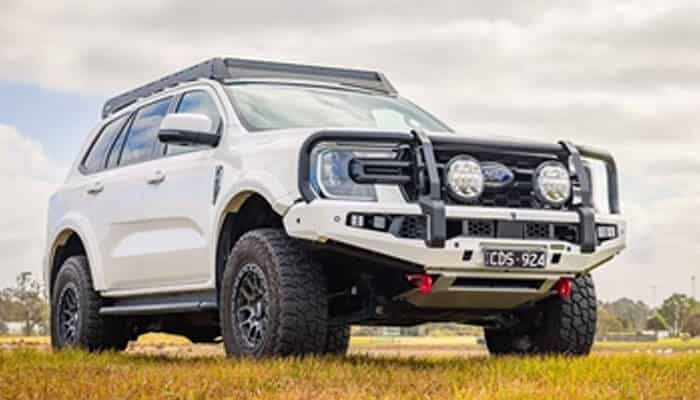
A vehicle’s Gross Vehicle Mass is legally binding, and standard factory payloads are often quickly exhausted by commercial demands. Operating any vehicle over its factory limit is illegal in Australia, can immediately void fleet insurance policies, and invites severe non-compliance penalties. To legally carry heavier loads and enhance overall business utility, consider these essential modifications:
- GVM Suspension Upgrades: Upgrading your suspension is one of the most important modifications for a commercial SUV. Federally approved GVM upgrade kits provide a legal pathway to safely improve handling while carrying heavier commercial loads. When installed in accordance with applicable regulations, these upgrades can be incorporated into the vehicle’s compliance requirements across Australia.
- Frontal Protection and Winches: Bullbars do much more than look tough. They provide vital protection against animal strikes on remote rural roads, safeguarding the engine bay and ensuring your business does not suffer from unexpected downtime. Paired with a winch, they offer essential recovery options for remote site visits.
- Smart Storage Solutions: Roof racks, custom drawer systems, and rated cargo barriers keep heavy tools meticulously organised. More importantly, they prevent heavy equipment from becoming dangerous, unsecured projectiles in the event of sudden, emergency braking.
Navigating Tax Deductions and Financial Incentives
Beyond the practical advantages on the road, modifying your business vehicle may also provide valuable tax benefits. Eligible businesses may be able to claim deductions for qualifying business assets and approved work-related vehicle modifications, subject to current Australian taxation rules. Investing in work-specific commercial fit-outs can help maximise the long-term utility of the vehicle while supporting business operations.
According to the Australian Taxation Office, business owners can claim tax deductions for motor vehicle expenses, including repairs, servicing, and the depreciation of professional upgrades, provided the vehicle is legitimately used for daily operations. To take full advantage of these incentives, operators must maintain a compliant, detailed logbook. This documentation accurately apportions business versus private use, ensuring that entrepreneurs successfully claim motor vehicle expense deductions without incurring costly Fringe Benefits Tax penalties.
By carefully blending robust mechanical upgrades with smart financial planning, Australian business owners can transform a standard SUV into a highly protected, tax-efficient commercial asset. Investing in premium aftermarket parts is a direct investment in the longevity of your fleet and the well-being of your team. This dual approach ensures your business remains fully compliant with stringent state regulations while maximising potential tax returns. Ultimately, a properly modified vehicle pays dividends in safety and productivity on the job site, while delivering unmatched freedom when it is time to clock off and explore the outback.

Source: Cosmo Politian