




Popular sovereignty is the principle that legitimate political authority ultimately comes from the people. Under popular sovereignty, government officials do not personally own political power. Instead, they exercise authority through constitutional institutions created to serve and represent the people.
In the United States, popular sovereignty is closely connected with the Constitution’s opening words, “We the People.” The National Archives identifies popular sovereignty as one of the major principles underlying the Constitution and explains that the Preamble presents government as created by the people to represent, protect, and serve them.
The meaning of popular sovereignty also has an important historical dimension. During the 1850s, territorial popular sovereignty became a controversial policy that allowed settlers in U.S. territories to determine whether slavery would be permitted. That historical use of popular sovereignty became closely associated with Stephen A. Douglas, the Kansas-Nebraska Act, Bleeding Kansas, and the political crisis before the Civil War.
Understanding both meanings of popular sovereignty is important because the term appears in discussions of constitutional government, democracy, voting rights, U.S. history, and political theory.
Quick Answer
Popular sovereignty means that the people are the ultimate source of legitimate governmental authority. The popular sovereignty principle can operate through elections, representative government, constitutional ratification, constitutional amendments, initiatives, referendums, and other lawful forms of political participation.
Popular sovereignty does not require citizens to vote directly on every law or government decision. In the United States, popular sovereignty operates alongside representative government, federalism, separation of powers, constitutional rights, judicial review, and limited government.
Key Takeaways
- Popular sovereignty means political authority ultimately comes from the people.
- The phrase “We the People” is one of the clearest examples of popular sovereignty in the Constitution.
- The Declaration of Independence connects popular sovereignty with the consent of the governed.
- Elections are an important expression of popular sovereignty, but popular sovereignty is broader than voting.
- Popular sovereignty can operate through representative government rather than pure direct democracy.
- Constitutional rights place limits on how governmental power may be exercised.
- Voting-rights amendments expanded political participation and strengthened the practical operation of popular sovereignty.
- During the 1850s, territorial popular sovereignty referred to allowing settlers to decide the status of slavery.
- The Kansas-Nebraska Act and Bleeding Kansas demonstrated serious problems with that historical version of popular sovereignty.
What Is Popular Sovereignty?
Popular sovereignty is the political principle that legitimate governmental authority originates with the people who are governed. The word sovereignty generally refers to supreme political authority. The word popular identifies the people as the source of that authority.
A simple model of popular sovereignty is:
People → Constitution and political institutions → Government authority
This means public officials exercise authority through government institutions rather than possessing political power as personal property.
The popular sovereignty principle answers a basic political question:
Where does legitimate government authority come from?
The answer is:
The people.
What Does Popular Sovereignty Mean in Simple Terms?
In simple terms, popular sovereignty means that government gets its legitimate authority from the people.
Citizens can exercise popular sovereignty in several ways, including:
- Voting for representatives
- Participating in federal elections
- Participating in state and local elections
- Petitioning government
- Joining civic and political organizations
- Voting on initiatives or referendums where permitted
- Participating in constitutional processes
- Replacing elected officials through future elections
Voting is therefore one of the clearest examples of popular sovereignty, but voting alone does not completely define the concept.
Why Is Popular Sovereignty Important?
Popular sovereignty is important because it establishes the people as the ultimate source of political legitimacy. Without popular sovereignty, political authority could instead be based on monarchy, hereditary rule, military control, or another form of authority disconnected from public consent.
The popular sovereignty principle supports several important ideas:
- Government exists for the people.
- Public officials exercise temporary authority.
- Citizens can choose representatives.
- Elections create political accountability.
- Political offices do not permanently belong to individuals.
- Constitutional procedures can be used to change government rules.
- Government remains accountable to constitutional limits.
Popular sovereignty therefore helps explain why elected leaders govern through public institutions rather than personal ownership of political power.
Where Did Popular Sovereignty Come From?
The idea of popular sovereignty developed from older political debates about legitimate government, natural rights, representation, consent, and political authority.
John Locke and Popular Sovereignty
English philosopher John Locke became particularly influential in ideas related to popular sovereignty. His Two Treatises of Government, published in 1690, discussed natural rights, political legitimacy, consent, and resistance to abusive government.
Locke’s political philosophy helped strengthen the idea that legitimate government should depend on the consent of the people rather than hereditary authority. This concept became an important intellectual foundation for later ideas of popular sovereignty in government.
Popular Sovereignty and the Declaration of Independence
The Declaration of Independence provides one of the clearest early American expressions of the popular sovereignty principle.
- It states that governments derive their just powers from the “consent of the governed.”
- This language reflects a core idea behind popular sovereignty:
- Government authority is legitimate because the people authorize it.
The Declaration therefore helped establish an important philosophical foundation for popular sovereignty before the U.S. Constitution was created.
Popular Sovereignty in the U.S. Constitution
Popular sovereignty in the Constitution is one of the central principles of American government. The exact phrase “popular sovereignty” is not repeatedly written throughout the Constitution. However, the concept is deeply embedded in the constitutional structure.
Major constitutional principles include:
- Popular sovereignty
- Republicanism
- Limited government
- Federalism
- Separation of powers
- Checks and balances
These principles address different questions. Popular sovereignty explains where political authority comes from. Other constitutional principles explain how that authority is distributed and limited.
Why Does “We the People” Represent Popular Sovereignty?
The Constitution begins:
“We the People of the United States…”
- This phrase is one of the clearest examples of popular sovereignty in the Constitution.
- The Constitution does not begin by saying that political authority belongs to a king, permanent ruler, or government institution.
- Instead, it identifies the people as the political source establishing the constitutional system.
- For this reason, “We the People” is often used as the simplest constitutional explanation of popular sovereignty.
A short way to remember it is:
Popular sovereignty = We the People
How Did Constitutional Ratification Demonstrate Popular Sovereignty?
The ratification process also illustrates popular sovereignty in government.
- Article VII required ratification by conventions in nine states before the Constitution could take effect among the ratifying states.
- The Constitution therefore did not become effective simply because delegates signed it.
- Special state conventions considered whether to accept the new constitutional system.
- New Hampshire became the ninth state to ratify the Constitution in 1788.
This is an important example of popular sovereignty because the authority of the new Constitution was presented as coming through representative processes linked to the people.
It also demonstrates that popular sovereignty does not require direct democracy. The people did not participate in one nationwide vote on the Constitution. Instead, popular sovereignty operated through state ratifying conventions.
How Does Popular Sovereignty Work in Government?
Popular sovereignty in government works through several interconnected institutions and processes.
Citizens Choose Representatives
Eligible citizens vote for representatives who exercise government authority on their behalf.
This is one of the most visible ways popular sovereignty operates.
Elections Create Accountability
Elections allow voters to retain or replace elected officials.
This makes elections an important mechanism of popular sovereignty.
Representatives Exercise Constitutional Authority
Elected officials do not receive unlimited power simply because they win elections.
Popular sovereignty operates through constitutional institutions, which means officials must exercise authority within legal limits.
Constitutional Rights Limit Government
Popular sovereignty does not mean that majority preferences automatically override constitutional protections.
Individual rights can place limits on government action.
Citizens Participate Beyond Elections
Popular sovereignty may also be expressed through:
- Petitions
- Public meetings
- Civic organizations
- Political campaigns
- Public comments
- Initiatives
- Referendums
- Constitutional processes
Constitutional Rules Can Change
Article V creates a process for amending the Constitution.
This demonstrates how popular sovereignty can operate through structured constitutional procedures rather than ordinary majority voting.
Examples of Popular Sovereignty
The following table shows practical examples of popular sovereignty:
| Popular Sovereignty Example | How It Reflects Popular Sovereignty |
| House elections | Citizens choose representatives who exercise legislative authority |
| Senate elections | Voters directly elect U.S. senators |
| State elections | Citizens choose governors and state legislators |
| Local elections | Residents may elect mayors, councils and other officials |
| Constitutional ratification | State conventions approved the Constitution |
| Constitutional amendments | Constitutional rules can change through Article V |
| Citizen initiatives | Voters can propose measures in some jurisdictions |
| Referendums | Certain political questions can be submitted directly to voters |
| Electoral accountability | Citizens can replace elected officials |
These popular sovereignty examples show that the principle can operate through both representative and direct forms of participation.
Popular Sovereignty and the House of Representatives
- The House of Representatives is an important example of popular sovereignty in the U.S. government.
- Members of the House are elected by voters in congressional districts.
- Because representatives serve two-year terms, citizens receive regular opportunities to choose who will represent them.
- This creates a direct connection between popular sovereignty and federal legislative authority.
The Seventeenth Amendment and Popular Sovereignty
The Seventeenth Amendment provides another major example of popular sovereignty. Originally, U.S. senators were selected by state legislatures.
The Seventeenth Amendment, ratified in 1913, established direct election of senators by voters. This change strengthened the direct electoral expression of popular sovereignty by allowing citizens to choose members of both chambers of Congress more directly.
Popular Sovereignty and Voting Rights
The practical operation of popular sovereignty depends partly on who is permitted to participate in elections and political institutions. Political participation was historically much narrower than it is today.
Several constitutional amendments and laws expanded or protected voting rights and therefore affected how popular sovereignty operates in practice.
Fifteenth Amendment
The Fifteenth Amendment was ratified in 1870. It prohibits denial or abridgment of voting rights because of race, color, or previous condition of servitude.
Nineteenth Amendment
The Nineteenth Amendment was ratified in 1920. It prohibits denial or abridgment of voting rights on account of sex.
Twenty-Fourth Amendment
The Twenty-Fourth Amendment was ratified in 1964. It prohibits poll taxes in specified federal elections.
Voting Rights Act of 1965
The Voting Rights Act created federal protections intended to enforce voting rights and address discriminatory voting practices.
Twenty-Sixth Amendment
The Twenty-Sixth Amendment was ratified in 1971. It protects voting rights for U.S. citizens age 18 or older against denial or abridgment based on age.
These developments expanded participation and changed how popular sovereignty in the United States functions in practice.
Popular Sovereignty in Theory and Practice
There is an important difference between popular sovereignty as a principle and its historical implementation.
In theory:
Popular sovereignty means political authority comes from the people.
In practice:
Not everyone had equal political participation throughout American history. Voting rights and political participation expanded over time through constitutional amendments, legislation, political movements, and legal developments.
This distinction is important because popular sovereignty is not only an abstract political idea. Its practical meaning depends on who can participate in the political system.
Popular Sovereignty vs. Democracy
Popular sovereignty and democracy are related but different concepts.
Popular sovereignty describes the source of political authority.
Democracy describes systems and processes through which citizens participate in political decision-making.
Therefore:
Popular sovereignty = the people are the source of authority
Democracy = the people participate in governing
A democratic system is one important way of putting popular sovereignty into practice.
Popular Sovereignty vs. Republicanism
Popular sovereignty and republicanism also have different meanings.
Popular sovereignty asks:
Where does political authority come from?
Answer:
The people.
Republicanism asks:
How can citizens exercise political authority through government institutions?
One answer is through elected representatives.
In simple terms:
Popular sovereignty = source of authority
Republicanism = representative method of exercising authority
Popular Sovereignty vs. Direct Democracy
Popular sovereignty does not mean direct democracy.
| Popular Sovereignty | Direct Democracy |
| Identifies the people as the source of political authority | Allows citizens to decide certain issues directly |
| Can operate through representatives | Uses direct voting on measures |
| Is a broad political principle | Is a decision-making method |
| Can exist in representative government | Often appears through initiatives and referendums |
This distinction matters because a representative republic can still be based on popular sovereignty.
Popular Sovereignty vs. Majority Rule
Popular sovereignty is also broader than majority rule.
Majority rule is a method of making political decisions.
Popular sovereignty identifies the people as the underlying source of political authority.
Constitutional government may restrict what political majorities can do through:
- Individual rights
- Due process
- Judicial review
- Separation of powers
- Federalism
- Constitutional restrictions
- Checks and balances
Therefore:
Popular sovereignty tells us where authority comes from.
Majority rule describes one way political decisions may be made.
Popular Sovereignty vs. Limited Government
Popular sovereignty and limited government work together.
Popular Sovereignty
Who is the source of governmental authority?
The people.
Limited Government
Can government exercise unlimited authority?
No.
Under the U.S. constitutional system, popular sovereignty gives government its political legitimacy while limited government restricts what public institutions may lawfully do.
Popular Sovereignty vs. Federalism
Popular sovereignty and federalism describe different features of government.
Popular sovereignty identifies the source of political authority.
Federalism divides governmental powers between national and state governments.
A simple distinction is:
Popular sovereignty = source of authority
Federalism = distribution of authority
Both principles operate together in the United States.
Popular Sovereignty and Judicial Review
Judicial review can seem unusual when discussing popular sovereignty.
If elected representatives pass a law, why can courts declare it unconstitutional?
The answer is that elected governments operate under the Constitution.
- In Marbury v. Madison (1803), the Supreme Court established judicial review as a major principle of constitutional law.
- The decision reasoned that the Constitution represents higher law and that ordinary legislation cannot override constitutional restrictions.
- This is compatible with popular sovereignty because the constitutional system itself claims authority through the people.
- Therefore, popular sovereignty does not mean every law passed by elected officials is automatically constitutional.
Ballot Initiatives and Popular Sovereignty
- Ballot initiatives are another example of popular sovereignty in practice.
- In jurisdictions that permit initiatives, citizens may collect signatures and attempt to place qualifying proposals before voters.
- This creates a more direct form of participation than electing representatives who later decide the issue.
- However, even ballot initiatives operate within constitutional and legal rules.
This illustrates an important feature of popular sovereignty:
The people may exercise authority directly in some cases, but that authority still operates through established legal procedures.
Popular Sovereignty vs. Tribal Sovereignty
Popular sovereignty and tribal sovereignty should not be confused.
| Popular Sovereignty | Tribal Sovereignty |
| Identifies the people as the ultimate source of political authority | Refers to the inherent self-governing authority of tribal nations |
| A principle of U.S. constitutional government | Exists within a distinct federal-tribal legal framework |
| Commonly expressed through elections and representation | Includes powers of tribal self-government |
| Concerns political legitimacy | Concerns governmental authority and tribal status |
Tribal sovereignty therefore has a separate legal foundation from popular sovereignty.
What Did Popular Sovereignty Mean Before the Civil War?
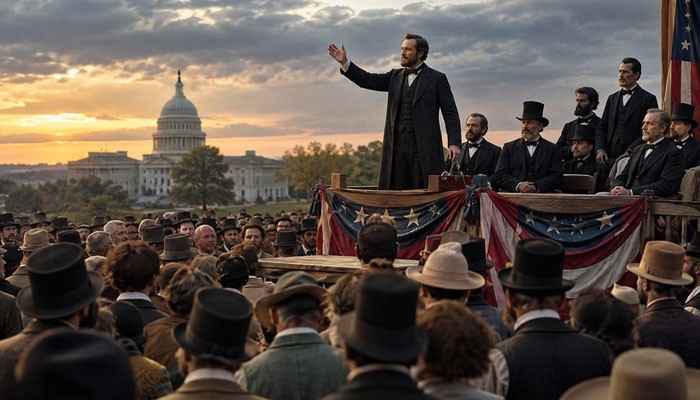
In U.S. history, popular sovereignty gained a more specific meaning during debates over slavery before the Civil War. Political leaders argued over whether slavery should be allowed in western territories. One proposed solution was territorial popular sovereignty.
- Under this policy, settlers living in a territory would determine whether slavery would be permitted.
- Senator Stephen A. Douglas became one of the strongest supporters of territorial popular sovereignty.
- This historical meaning should be distinguished from constitutional popular sovereignty.
Popular Sovereignty and the Kansas-Nebraska Act
The most famous historical example of territorial popular sovereignty came through the Kansas-Nebraska Act of 1854. The law organized Kansas and Nebraska territories and allowed territorial political processes to determine whether slavery would be permitted.
The Kansas-Nebraska Act effectively repealed the earlier Missouri Compromise restriction that had prohibited slavery in much of the Louisiana Purchase territory north of latitude 36°30′.
Supporters of territorial popular sovereignty hoped local decision-making would reduce national conflict.
Instead, popular sovereignty intensified political struggle.
Why Did Stephen Douglas Support Popular Sovereignty?
Stephen Douglas argued that territorial residents should determine whether slavery would be permitted rather than having Congress impose one national rule.
For Douglas, popular sovereignty offered a political compromise. It allowed him to argue that territorial settlers should control their own institutions.
However, territorial popular sovereignty created serious practical problems because opposing groups had strong incentives to influence settlement, elections, and territorial governments.
What Was Bleeding Kansas?
Bleeding Kansas was one of the clearest examples of the problems surrounding territorial popular sovereignty. After the Kansas-Nebraska Act, both pro-slavery and anti-slavery settlers moved into Kansas. Each side hoped to influence the outcome of popular sovereignty.
The conflict included:
- Rival territorial governments
- Election fraud
- Disputed elections
- Pro-slavery migration
- Anti-slavery migration
- Armed conflict
- Political intimidation
- Killings
Instead of peacefully resolving the slavery question, territorial popular sovereignty contributed to political instability and violence.
Kansas eventually entered the Union as a free state in 1861.
Why Was Popular Sovereignty Controversial in the 1850s?
Territorial popular sovereignty became controversial for several reasons.
- First, it reopened the slavery issue in territories affected by the Missouri Compromise.
- Second, opposing groups moved into Kansas specifically to influence territorial elections.
- Third, disputed elections raised questions about whether the government truly represented residents.
Fourth, territorial popular sovereignty allowed settlers to debate slavery while enslaved people themselves had no political voice in the decision.
These problems demonstrated that popular sovereignty could not easily resolve the national conflict over slavery.
Dred Scott and Popular Sovereignty
The Supreme Court’s Dred Scott v. Sandford decision of 1857 created another major problem for territorial popular sovereignty. The Court’s reasoning held that Congress lacked constitutional authority to prohibit slavery in federal territories.
This decision complicated Stephen Douglas’s theory because territorial popular sovereignty depended on the idea that territorial residents could determine whether slavery would exist. The Dred Scott decision therefore created an important constitutional conflict involving popular sovereignty.
What Was the Freeport Doctrine?
Stephen Douglas attempted to preserve popular sovereignty during the Lincoln-Douglas debates of 1858.
At Freeport, Illinois, Abraham Lincoln asked Douglas whether territorial residents could keep slavery out despite the Dred Scott decision.
- Douglas responded that slavery required supportive local legislation.
- He argued that territorial voters could elect lawmakers who refused to enact laws needed to support slavery.
- This position became known as the Freeport Doctrine.
The sequence is useful for understanding territorial popular sovereignty:
Kansas-Nebraska Act → Bleeding Kansas → Dred Scott → Lincoln-Douglas debates → Freeport Doctrine
These events show why popular sovereignty became increasingly difficult to use as a solution to the slavery controversy.
Constitutional Popular Sovereignty vs. Territorial Popular Sovereignty
The two meanings of popular sovereignty should be clearly separated.
| Constitutional Popular Sovereignty | Territorial Popular Sovereignty |
| Broad principle of government legitimacy | Specific policy used before the Civil War |
| Government authority comes from the people | Territorial settlers would determine the status of slavery |
| Connected with “We the People” | Associated with Stephen A. Douglas |
| Continues as a constitutional principle | Primarily associated with 1850s territorial politics |
| Expressed through elections and constitutional institutions | Central to the Kansas-Nebraska controversy |
This distinction is essential for understanding popular sovereignty correctly. When a civics question asks about popular sovereignty, it usually refers to the constitutional principle.
When a U.S. history question asks about popular sovereignty in the 1850s, it usually refers to territorial policy involving slavery.
Benefits of Popular Sovereignty
The popular sovereignty principle can support several features of constitutional government.
Political Participation
Popular sovereignty gives citizens a role in choosing public officials and influencing government.
Electoral Accountability
Elected officials can be replaced through elections.
Representative Government
Citizens can authorize representatives to exercise political authority on their behalf.
Peaceful Political Change
Popular sovereignty provides constitutional ways to change political leadership without permanent hereditary rule.
Constitutional Change
The amendment process allows fundamental governmental rules to change through established procedures.
Government Legitimacy
Popular sovereignty provides a political basis for the claim that government acts with authority derived from the people.
Limits and Challenges of Popular Sovereignty
Popular sovereignty does not automatically solve every problem of government.
Political Participation Can Be Unequal
Throughout history, many groups lacked equal political participation.
Majority Preferences Can Face Constitutional Limits
Political majorities cannot automatically override constitutional protections.
Citizens Do Not Decide Every Policy Directly
Representative institutions make most daily government decisions.
Constitutional Change Can Be Difficult
Changing fundamental constitutional rules requires more than an ordinary majority.
Institutions Matter
Popular sovereignty depends on functioning elections, constitutional protections, representative institutions, and lawful political processes.
Common Misunderstandings About Popular Sovereignty
Does popular sovereignty mean direct democracy?
No.
Popular sovereignty can operate through representative government.
Does popular sovereignty mean unlimited majority rule?
No.
Constitutional rights and governmental limits still apply.
Does popular sovereignty mean every official must be elected?
No.
A constitutional system can include elected officials, appointed officials, judges, and other institutions while still being based on popular sovereignty.
Does popular sovereignty only refer to slavery?
No.
The slavery-related meaning refers to a particular historical use of territorial popular sovereignty.
The broader meaning of popular sovereignty concerns the source of political authority.
Did popular sovereignty create universal voting rights in 1787?
No.
Political participation was restricted at the founding and expanded considerably over time.
Popular Sovereignty Examples for Students
Example 1: Voting for Congress
Citizens vote for a member of Congress.
This is an example of popular sovereignty because voters select someone who will exercise legislative authority on their behalf.
Example 2: Replacing an Elected Official
Citizens vote for a different candidate at the next election.
This demonstrates popular sovereignty because political authority is not permanently owned by the current officeholder.
Example 3: Direct Election of Senators
The Seventeenth Amendment allows citizens to directly elect U.S. senators.
This is another clear example of popular sovereignty.
Example 4: Ratifying the Constitution
Special state conventions approved the Constitution.
This shows popular sovereignty operating through representative constitutional procedures.
Example 5: Citizen Initiative
Citizens in jurisdictions that permit initiatives can attempt to place qualifying measures before voters.
This is a more direct example of popular sovereignty in action.
Popular Sovereignty Timeline
| Year | Popular Sovereignty Development |
| 1690 | John Locke publishes Two Treatises of Government |
| 1776 | Declaration of Independence links government authority to consent of the governed |
| 1787 | Constitution begins with “We the People” |
| 1787–1788 | State conventions debate constitutional ratification |
| 1788 | New Hampshire becomes the ninth state to ratify |
| 1803 | Marbury v. Madison establishes judicial review |
| 1854 | Kansas-Nebraska Act applies territorial popular sovereignty to the slavery issue |
| 1854–1861 | Bleeding Kansas demonstrates conflict surrounding territorial popular sovereignty |
| 1857 | Dred Scott decision complicates popular sovereignty in the territories |
| 1858 | Freeport Doctrine attempts to preserve Douglas’s popular sovereignty policy |
| 1870 | Fifteenth Amendment is ratified |
| 1913 | Seventeenth Amendment establishes direct election of senators |
| 1920 | Nineteenth Amendment is ratified |
| 1964 | Twenty-Fourth Amendment is ratified |
| 1965 | Voting Rights Act becomes law |
| 1971 | Twenty-Sixth Amendment protects voting rights for citizens age 18 and older |
Popular Sovereignty in One Sentence
Popular sovereignty is the principle that legitimate governmental authority ultimately comes from the people.
For students:
Popular sovereignty means the people are the ultimate source of government’s political power.
Conclusion
Popular sovereignty is one of the most important principles of American constitutional government. At its core, popular sovereignty means that legitimate political authority ultimately comes from the people rather than permanently belonging to rulers, public officials, or government institutions.
The principle of popular sovereignty in the Constitution is most clearly reflected in the words “We the People.” Popular sovereignty also operates through elections, representative government, constitutional ratification, amendments, voting rights, and certain forms of direct citizen participation.
At the same time, popular sovereignty has an important historical meaning. During the 1850s, territorial popular sovereignty became a policy for allowing settlers to decide whether slavery would be permitted. The Kansas-Nebraska Act, Bleeding Kansas, Dred Scott decision, and Freeport Doctrine demonstrated the serious political and constitutional problems surrounding that policy.
The easiest way to understand popular sovereignty is to separate its two meanings. Constitutional popular sovereignty explains where legitimate government authority comes from, while territorial popular sovereignty describes a specific and deeply contested policy from antebellum U.S. history.
Because popular sovereignty connects the people with government authority, elections, representation, constitutional limits, voting rights, and political participation, it remains an essential concept for understanding the U.S. Constitution, democracy, American government, and U.S. history.
Popular Sovereignty FAQs
1. What is popular sovereignty?
Popular sovereignty is the principle that legitimate governmental authority ultimately comes from the people.
2. What is a simple example of popular sovereignty?
Voting for representatives is a simple example of popular sovereignty because citizens choose people who exercise political authority on their behalf.
3. Where is popular sovereignty found in the Constitution?
Popular sovereignty is most clearly reflected in the phrase “We the People” in the Preamble.
4. Why is popular sovereignty important?
Popular sovereignty is important because it establishes the people as the ultimate source of government authority.
5. How does popular sovereignty work in government?
Popular sovereignty works through elections, representation, constitutional procedures, voting rights, initiatives, referendums, and other lawful forms of political participation.
6. Is popular sovereignty the same as democracy?
No.
Popular sovereignty identifies the source of political authority, while democracy describes systems through which citizens participate in government.
7. Is popular sovereignty the same as majority rule?
No.
Majority rule is one way to make political decisions, while popular sovereignty is the broader principle that authority comes from the people.
8. Who supported popular sovereignty before the Civil War?
Stephen A. Douglas became one of the most prominent supporters of territorial popular sovereignty during the 1850s.
9. What did popular sovereignty mean in the Kansas-Nebraska Act?
Popular sovereignty meant territorial settlers would determine whether slavery would be permitted.
10. Why did popular sovereignty contribute to Bleeding Kansas?
Pro-slavery and anti-slavery settlers entered Kansas to influence territorial politics, leading to disputed elections, competing governments, and violence.
11. What was the Freeport Doctrine?
The Freeport Doctrine was Stephen Douglas’s argument that territorial residents could effectively prevent slavery by refusing to enact laws needed to support it.

Source: Cosmo Politian