


Gyaru Meaning refers to a Japanese fashion subculture known for bold makeup, expressive hairstyles, fashionable clothing, and individuality. Derived from the English word gal, gyaru became a prominent part of Japanese youth culture during the 1990s, particularly in Tokyo’s Shibuya district.
From dramatic ganguro makeup to elegant hime gyaru outfits, the subculture developed several distinctive styles. Although gyaru is often associated with blonde hair and tanned skin, its identity extends beyond these characteristics.
Today, gyaru continues to influence Japanese street fashion, anime, beauty trends, and social media. This guide explains what gyaru means, its history, popular fashion styles, cultural significance, and modern interpretations.
What Does Gyaru Mean in Japanese?
Gyaru (ギャル) comes from the English slang word gal, meaning a girl or young woman. In Japanese culture, however, the word developed a more specific association with fashionable young women and a recognizable youth subculture.
The meaning depends on context:
- Literal meaning: An informal expression for a girl or young woman.
- Fashion meaning: A person associated with distinctive Japanese street-fashion styles.
- Cultural meaning: An identity often connected with individuality, confidence, friendship, and self-expression.
In everyday Japanese, someone might be described as gyaru because of their appearance or outgoing personality without necessarily belonging to a particular fashion community.
Gyaru Meaning at a Glance
| Feature | Explanation |
| Japanese word | ギャル |
| English origin | Gal |
| Pronunciation | Approximately “gyah-roo” |
| Cultural origin | Japan |
| Main fashion center | Shibuya, Tokyo |
| Peak visibility | 1990s and 2000s |
| Recognizable characteristics | Expressive makeup, styled hair, fashionable clothing |
| Popular styles | Kogyaru, ganguro, hime gyaru, agejo |
| Modern identity | Reiwa gyaru and gyaru mindset |
Importantly, gyaru does not require a particular skin tone, hair color, or personality.
Gyaru Meaning in Japanese Slang
The term gyaru appears in several Japanese expressions related to fashion, makeup, and social identity.
| Japanese Expression | English Meaning |
| Gyaru-kei (ギャル系) | Gyaru-style fashion |
| Gyaru-ppoi (ギャルっぽい) | Gyaru-like in appearance or behavior |
| Gyaru meiku (ギャルメイク) | Gyaru makeup |
| Gyaru-o (ギャル男) | Male-associated gyaru fashion identity |
| Gyaru mindo (ギャルマインド) | Gyaru mindset |
| Gyaru bunka (ギャル文化) | Gyaru culture |
For example, gyaru-kei describes a fashion aesthetic, while gyaru-ppoi suggests that someone resembles characteristics associated with gyaru.
Understanding these expressions is useful when encountering the word in Japanese conversations, anime, or social media.
The Origins and History of Gyaru Culture
Gyaru culture developed gradually through changing fashion trends, beauty preferences, and youth identities in Japan.
Although the modern subculture became prominent in the 1990s, the Japanese use of the word predates that period.
Early Origins of the Word Gyaru
The Japanese historical dictionary Nihon Kokugo Daijiten records older uses of gyaru-related language, including material from 1931.
These earlier references did not describe the modern Shibuya fashion movement.
During the following decades, Western-influenced fashion and changing youth culture contributed to the development of new styles.
By the late 20th century, gyaru became increasingly associated with fashionable young women.
The Rise of Kogyaru in the 1990s
During the early 1990s, teenage girls began experimenting with modified school uniforms, dyed hair, and fashionable accessories.
This movement became associated with kogyaru, also written kogal.
Recognizable features included:
- Shortened school-uniform skirts.
- Loose socks.
- Brown or bleached hair.
- Platform loafers.
- Fashionable handbags.
- Decorative accessories.
Kogyaru helped establish gyaru as a visible youth-fashion identity.
Shibuya and the Growth of Gyaru Fashion
Tokyo’s Shibuya district became central to the movement.
Shopping centers, fashion retailers, and entertainment venues provided gathering places where young people could exchange ideas.
SHIBUYA109 became particularly influential during the 1990s.
Fashionable retail employees helped popularize clothing combinations, hairstyles, and makeup trends.
Brands such as me Jane, COCOLULU, and CECIL McBEE became associated with Shibuya’s growing fashion scene.
The Influence of egg Magazine
Launched in 1995, egg magazine played an important role in documenting gyaru culture.
The publication initially had a male-oriented format but increasingly focused on young women’s street fashion during the late 1990s.
Instead of relying exclusively on professional models, it frequently featured ordinary young women photographed around Shibuya.
Their styling choices helped shape emerging trends.
This approach gave participants greater influence over the fashion culture they helped create.
Gyaru Fashion Timeline
| Period | Major Development |
| Early 20th century | Older uses of gyaru-related language |
| Early 1990s | Kogyaru becomes increasingly visible |
| 1995 | egg magazine launches |
| Late 1990s | Ganguro and yamanba gain attention |
| 2000s | Romantic and glamorous gyaru styles expand |
| 2010s | Mainstream popularity changes |
| 2020s | Heisei-inspired fashion revivals attract new audiences |
The timeline demonstrates that gyaru has continually evolved rather than remaining one fixed fashion trend.
What Is Gyaru Fashion?
Gyaru fashion describes a family of Japanese street-fashion styles connected through expressive personal presentation.
Its identity comes from the coordination of makeup, hairstyles, clothing, and accessories.
1. Expressive Eye Makeup
Eye makeup is one of the most recognizable elements of many gyaru styles.
Common techniques include:
- Defined eyeliner.
- False eyelashes.
- Dramatic mascara.
- Eyeshadow in brown, pink, or gold.
- Makeup emphasizing the lower eye area.
- Carefully styled eyebrows.
- Glossy or nude-colored lips.
Historical variations sometimes used stronger contrasts, while contemporary styles may feature softer makeup.
2. Distinctive Hairstyles
Classic gyaru hairstyles frequently included blonde or light-brown coloring, large curls, waves, and added volume.
Decorative accessories and hair extensions were also common.
However, dyed hair is not required across every gyaru style.
3. Fashionable Clothing
Gyaru clothing varies depending on the substyle.
Popular historical items included mini skirts, fitted tops, decorative denim, platform footwear, and glamorous dresses.
Some styles emphasized casual outfits, while others focused on elaborate romantic clothing.
4. Accessories and Nail Art
Accessories contribute significantly to gyaru styling.
Common examples include decorative handbags, statement earrings, bows, platform shoes, rhinestones, and elaborate nail art.
The overall coordination is more important than wearing every accessory simultaneously.
Different Types of Gyaru Fashion Styles
Gyaru developed numerous substyles, each with recognizable characteristics.
Popular Gyaru Styles Compared
| Style | Main Characteristics |
| Kogyaru | School-uniform-inspired outfits and loose socks |
| Ganguro | Deep tanning, bleached hair, contrasting makeup |
| Yamanba | Dramatic eye makeup and decorative hairstyles |
| Manba | Colorful, theatrical makeup and accessories |
| Hime gyaru | Princess-inspired dresses, lace, bows |
| Himekaji | Casual romantic clothing and floral prints |
| Onee gyaru | Mature, sophisticated styling |
| Agejo | Glamorous nightlife-inspired fashion |
| Amekaji gyaru | American-inspired casualwear |
| Gyaru-o | Male-associated gyaru fashion |
These categories sometimes overlap, and their meanings have evolved within fashion communities.
Kogyaru: Schoolgirl-Inspired Fashion
Kogyaru became especially prominent during the 1990s.
- The style involved creatively modifying school uniforms with fashionable accessories.
- Loose socks, dyed hair, and platform loafers became recognizable elements.
- It helped establish gyaru as a youth-led fashion movement.
Ganguro: Bold and Contrasting Makeup
- Ganguro became internationally recognizable through its dramatic appearance.
- Historical examples featured deeply tanned skin, bleached hair, and contrasting light makeup.
- Its distinctive appearance challenged conventional beauty standards and attracted widespread attention.
However, ganguro represents only one branch of gyaru.
Yamanba and Manba: Dramatic Styling
- Yamanba and manba developed from the more extreme side of gyaru fashion.
- Their appearances often included striking makeup contrasts, bright accessories, and elaborate hairstyles.
- The names describe closely related but evolving aesthetics rather than universally fixed categories.
Hime Gyaru: Princess-Inspired Fashion
Hime gyaru combines glamorous styling with romantic clothing.
- The Japanese word hime means princess.
- Recognizable elements include pastel dresses, decorative bows, lace, curled hairstyles, and elegant accessories.
- Himekaji offers a more casual interpretation of romantic fashion.
Onee Gyaru and Agejo
- Onee gyaru emphasizes polished, mature clothing and sophisticated styling.
- Agejo developed associations with glamorous Japanese nightlife fashion.
- These styles show how the subculture expanded beyond its original teenage associations.
Gyaru vs. Ganguro vs. Kogyaru
Although these terms belong to the same fashion culture, they have different meanings.
| Feature | Gyaru | Ganguro | Kogyaru |
| Definition | Broad Japanese fashion subculture | Dramatic gyaru style | School-age gyaru identity |
| Clothing | Varies by substyle | Bold and eye-catching | Modified school uniforms |
| Makeup | Different techniques | Strong contrasts | Fashionable 1990s styles |
| Main period | 1990s onward | Late 1990s | Early and mid-1990s |
The key distinction: Gyaru is the wider fashion category, while ganguro and kogyaru represent particular historical styles.
Famous Gyaru Fashion Magazines and Brands
Fashion magazines and clothing retailers helped spread gyaru trends before social media became widespread. Important publications included egg, Popteen, men’s egg, Koakuma Ageha, and Happie Nuts.
Several fashion brands also became associated with the movement.
| Brand | Historical Association |
| ALBA ROSA | Resort-inspired clothing |
| me Jane | Shibuya youth fashion |
| COCOLULU | Colorful casualwear |
| CECIL McBEE | Glamorous feminine clothing |
| EGOIST | Mature-inspired styling |
| LIZ LISA | Romantic clothing |
These magazines and retailers helped develop recognizable fashion trends. However, following gyaru fashion does not require purchasing particular brands.
Gyaru Culture Beyond Clothing and Makeup
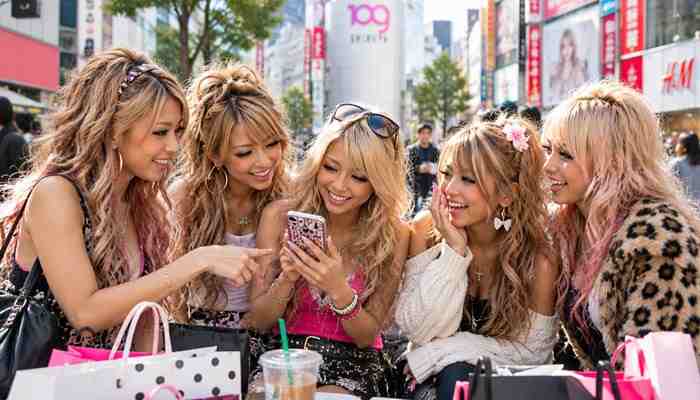
Understanding Gyaru Meaning requires examining the social communities connected to the movement. For many participants, gyaru involved friendship, group identity, entertainment, and personal expression.
Friendship and Gyaru Circles
Organized social groups known as gyaru circles, or gyarusa, brought together young people with shared interests. Activities included gatherings, fashion discussions, and social events.
Academic research on Shibuya’s gyaru communities demonstrates that these groups created meaningful relationships and organizational structures.
Purikura and Para Para
Two recognizable cultural activities were purikura and para para. Purikura refers to Japanese decorative photo-booth photography, often enjoyed with friends.
Para para is a coordinated dance style associated with Japanese dance-music scenes and certain gyaru communities. These activities contributed to the social identity of the subculture.
Why Was Gyaru Fashion Considered Rebellious?
Some gyaru styles challenged conventional expectations surrounding Japanese femininity. Traditional beauty preferences often emphasized dark hair, lighter complexions, and restrained makeup.
Certain gyaru participants instead adopted dyed hair, dramatic makeup, unconventional clothing, and attention-grabbing accessories.
- These appearances sometimes attracted criticism.
- However, not every participant intended to challenge society.
- Some joined because they enjoyed fashion, friendship, and experimentation.
Research on Japanese youth subcultures shows that gyaru can be understood within broader discussions of identity and changing social expectations.
Gyaru vs. Y2K, Harajuku, and Lolita Fashion
Gyaru is often confused with other fashion categories.
| Fashion Category | Main Difference |
| Gyaru | Specific Japanese youth-fashion subculture |
| Y2K | Broad late-1990s and early-2000s-inspired fashion |
| Harajuku fashion | Diverse styles associated with Tokyo’s Harajuku district |
| Lolita fashion | Decorative fashion with structured dresses and distinctive silhouettes |
Although some accessories and clothing styles overlap, their cultural origins differ. For example, wearing platform shoes and low-rise jeans does not automatically make an outfit gyaru.
The historical context and overall styling help explain the distinction.
Gyaru Meaning in Anime and Japanese Pop Culture
Anime and manga frequently feature characters described as gyaru. These fictional characters may have fashionable hairstyles, striking makeup, decorative accessories, or outgoing personalities.
Some stories use gyaru characters to challenge stereotypes by portraying fashionable or confident individuals as kind, hardworking, or thoughtful.
However, fictional portrayals do not represent every real-world gyaru participant. The term in anime may describe a recognizable character type rather than membership in a specific fashion community.
What Is the Gyaru Mindset?
Modern discussions increasingly include gyaru mind, or the gyaru mindset. This concept emphasizes confidence, positivity, individuality, and self-expression.
Commonly associated qualities include:
- Expressing personal preferences.
- Supporting friends.
- Maintaining a positive attitude.
- Developing confidence.
- Being less concerned about unnecessary judgment.
These characteristics are not universal rules followed by every gyaru participant. Instead, the mindset represents one contemporary interpretation of the subculture.
Is Gyaru Fashion Still Popular Today?
Yes. Gyaru remains active through fashion enthusiasts, online communities, contemporary publications, and nostalgic revivals.
The renewed popularity of Heisei-era fashion has encouraged younger audiences to revisit historical gyaru makeup, hairstyles, and clothing.
Reiwa Gyaru and Modern Beauty
The Reiwa era began in 2019.
Contemporary gyaru interpretations sometimes combine historical influences with softer makeup and modern clothing.
Popular approaches include glossy lips, brown-toned cosmetics, carefully styled eyes, and contemporary fashion combinations.
Other enthusiasts continue wearing more dramatic historical styles.
International Interest
Social media has also helped international enthusiasts exchange makeup techniques, clothing ideas, and historical fashion references.
However, understanding the Japanese origins of gyaru remains important when appreciating or adopting the style.
How to Try Gyaru Fashion as a Beginner
Beginners can explore gyaru fashion without purchasing an entirely new wardrobe.
Step 1: Choose a Style
Research different gyaru substyles and select one that matches your preferences.
Step 2: Experiment With Makeup
Begin with eyeliner, mascara, or false eyelashes to emphasize the eyes.
Step 3: Style Your Hair
Try curls, waves, volume, or decorative accessories without necessarily changing your natural hair color.
Step 4: Coordinate Your Outfit
Combine suitable clothing such as fitted tops, denim, skirts, dresses, or platform footwear.
Step 5: Add Accessories
Use earrings, handbags, hair decorations, or nail art to complete the look.
Step 6: Understand the Culture
Explore historical magazines, interviews, and contemporary fashion communities. Understanding the background helps distinguish gyaru from generic early-2000s fashion.
A dark tan is not required for gyaru-inspired fashion. Avoid harmful UV tanning practices and follow appropriate cosmetic hygiene guidance.
Conclusion: Gyaru Meaning
Gyaru Meaning goes beyond bold makeup, trendy hairstyles, and fashionable clothing. It represents a Japanese fashion subculture that celebrates individuality, confidence, and self-expression. Emerging in Tokyo’s Shibuya district during the 1990s, gyaru became an influential part of Japanese street fashion.
From kogyaru and ganguro to hime gyaru and modern Reiwa gyaru, the subculture has evolved through changing beauty trends and cultural influences. Today, social media and international fashion communities continue to expand its popularity.
Understanding Gyaru Meaning helps fashion enthusiasts appreciate its history, distinctive styles, and cultural significance. Its lasting influence reflects the creativity and individuality that define Japanese gyaru fashion.
Gyaru Meaning FAQs
1. What is the exact gyaru meaning in English?
Gyaru comes from the English slang word gal, meaning a girl or young woman. In Japanese fashion, it also refers to a distinctive subculture known for expressive makeup, hairstyles, and clothing.
2. What does gyaru mean in anime?
In anime, gyaru often describes a fashionable character associated with recognizable styling or outgoing behavior. These portrayals do not represent every real-world gyaru participant.
3. Can someone be gyaru without tanned skin?
Yes. Tanning was historically associated with ganguro and certain related styles, but many gyaru variations do not require it.

Source: Cosmo Politian