




The kitchen floor rarely gets dirty in just one way. Toast crumbs end up beside a splash of milk, muddy footprints meet pet hair at the back door, and a sticky patch appears near the dining table. Sweeping first and mopping afterwards works, but it can feel disproportionate when the mess is small and frequent. A practical alternative for suitable surfaces is a floor-cleaning tool designed to collect loose debris while washing the floor in the same session.
Know the difference between a floor washer and a shop vacuum
The phrase wet and dry can describe very different appliances. A workshop-style wet/dry vacuum is intended for a different range of materials and often uses a hose and canister. A domestic upright floor washer is designed for hands-on cleaning of compatible hard floors using a powered cleaning head and water system. It should not automatically be used to vacuum carpet or to collect hazardous liquids.
Before buying or using one, check the surface instructions. Sealed tiles, suitable vinyl and some sealed timber or laminate floors may be compatible with a particular machine; unfinished wood and moisture-sensitive surfaces generally require more caution. Always follow both the cleaner’s manual and the flooring manufacturer’s guidance, especially around cleaning solutions and the amount of water applied.
Handle crumbs and spills in the right order
A wet spill beside dry debris is where a combined floor washer can be useful. Instead of leaving grit behind before reaching for a mop, the cleaning head is intended to pick up loose material and wash the floor as it moves. That does not mean every spill is safe to collect. Broken glass, large solids, grease, corrosive substances and other unusual messes may need separate handling under the product instructions.
A wet and dry vacuum designed for domestic hard floors can make sense for regular kitchen clean-ups. Narwal’s Australian wet/dry range, for example, includes cordless upright floor cleaners rather than autonomous robot mops. This distinction matters: a person still steers the appliance, choosing where to spend extra time and how to approach the edges of a spill.
Work from cleaner areas towards dirtier ones
For routine floor washing, start with loose items out of the way and tackle the less soiled part of a room before the busiest patch. Slow, overlapping passes are usually more controlled than racing the head over a stain. Where the unit uses separate clean-water and dirty-water containers, check levels before starting and do not let a full waste tank sit after the job.
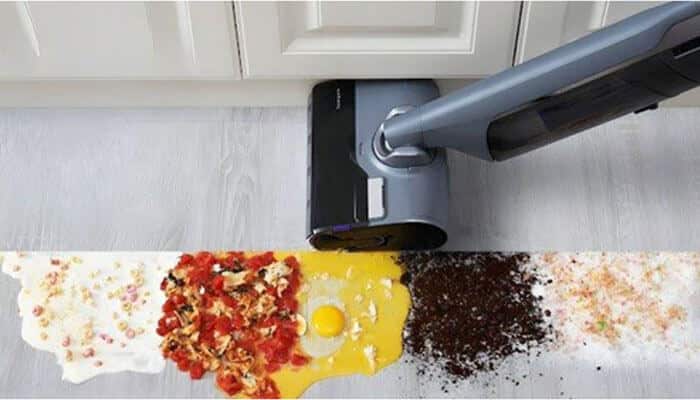
Dried-on food may need extra passes or pretreatment approved for the flooring and cleaner. It is tempting to add household detergent, but some machines require a specific low-foaming formula. Unapproved cleaning agents can cause excess foam, leave residue or affect machine components. Follow the official instructions rather than assuming ordinary floor cleaner will be safe.
Pay attention to the edges of rooms
The last few centimetres alongside kitchen cabinets and skirting boards are often where crumbs accumulate. When comparing floor washers, look at the cleaning-head geometry and whether the roller reaches close to an edge. A machine that turns comfortably around chair legs can be more useful in a small kitchen than one that performs well only across wide open tiles.
Low furniture adds another practical constraint. Some upright cleaners can lie relatively flat to reach under a cabinet or sofa; others need more clearance. Check the permitted operating angle and whether the machine is designed to retain dirty water safely in that position. Never force a unit underneath furniture if the manufacturer prohibits using it flat.
Clean the cleaner after the floor
Wet floor-cleaning equipment needs more immediate care than a dry broom. Empty the waste tank promptly, remove collected hair and food particles, and rinse the components specified in the manual. If the product offers a self-wash or drying cycle, use it as directed, but still check for residue in removable parts. Leaving damp debris in a sealed tank can cause unpleasant odours.
Keep clean and dirty water in their intended containers. Inspect filters and rollers for wear, and allow any parts that require air-drying to dry fully before storage. A few minutes of post-cleaning care can make the next quick clean-up much more pleasant.
Make sure children and pets are away from the cleaning path while you deal with fresh spills. For food and drink, remove large pieces first if the machine manual requires it, then work slowly enough for the roller to pick up residue. After cleaning, inspect the surface in good light. A shiny patch can be leftover moisture rather than a sign of complete cleanliness, so allow the floor to dry before replacing a mat.
For a busy household, storage also matters. Keep the charger or dock somewhere convenient rather than hidden behind furniture that makes every clean a chore. Confirm the required ventilation and charging conditions in the manual. Having a dedicated place for the equipment, approved cleaning fluid and spare rollers makes it easier to respond quickly without leaving water-filled parts unattended.
Decide where it fits in your wider routine
A domestic floor washer is not automatically a replacement for every other cleaning appliance. Carpeted bedrooms, upholstery, stairs and high shelves still call for different tools. Likewise, daily robot maintenance cleaning and hands-on spot washing play different roles. One addresses routine coverage; the other lets you respond immediately to a visible spill.
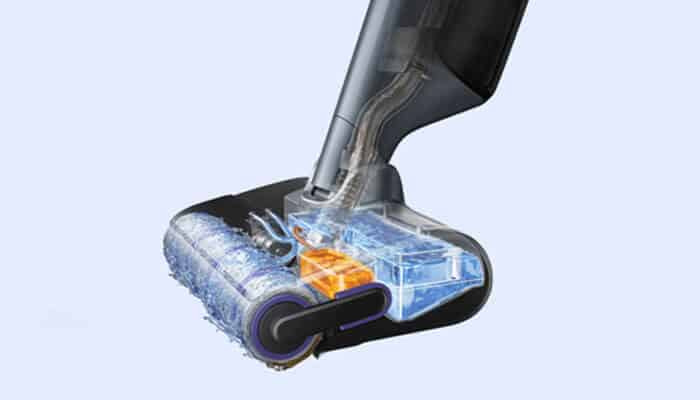
For households with large areas of compatible hard flooring, using the right tool for mixed dry and wet messes can reduce the number of separate cleaning steps. The real benefit comes from choosing a suitable surface, treating difficult spills safely and maintaining the appliance after use.

Source: Cosmo Politian