




What is a bankruptcy? In the United States, bankruptcy is a federal legal process that helps individuals and businesses deal with debts they cannot afford to repay. It can eliminate certain debts, temporarily stop collection efforts, or establish a structured repayment plan. However, filing for bankruptcy does not guarantee that every debt disappears or that all property remains protected.
For someone struggling with credit card bills, medical expenses, or business loans, the outcome depends on the type of debt and bankruptcy chapter. While many unsecured debts may be discharged, obligations such as child support, certain taxes, and secured loans can remain. Understanding these differences is essential before making a decision that could affect your finances for years.
Bankruptcy filings are rising in the United States. According to the Administrative Office of the U.S. Courts, 621,111 bankruptcy cases were filed during the 12 months ending September 30, 2026, an increase of 11.4% from the previous year. Of these, 594,057 were nonbusiness cases. The figures highlight how frequently Americans turn to bankruptcy courts for debt relief, although they do not establish the reasons behind individual filings.
What Bankruptcy Changes—and What It Does Not
Understanding what is a bankruptcy involves more than knowing that it provides debt relief. Three important legal concepts determine how bankruptcy affects creditors, outstanding debts, and property ownership.
- The automatic stay: Filing for bankruptcy generally triggers temporary protection against many collection activities, including lawsuits, wage garnishments, and creditor demands. However, exceptions apply, and creditors may request court permission to resume certain actions.
- Debt discharge: A bankruptcy discharge releases an eligible borrower from personal liability for qualifying debts. Once discharged, creditors generally cannot pursue payment of those obligations.
- Secured liens: Bankruptcy does not automatically eliminate a lender’s legal claim against property used as collateral. For example, a car lender may retain the right to repossess a financed vehicle even if the borrower’s personal liability is discharged.
According to the U.S. Courts’ bankruptcy discharge guidance, valid liens may survive bankruptcy. This distinction is particularly important for homeowners and borrowers with secured vehicle loans.
Which Debts Can Bankruptcy Erase?
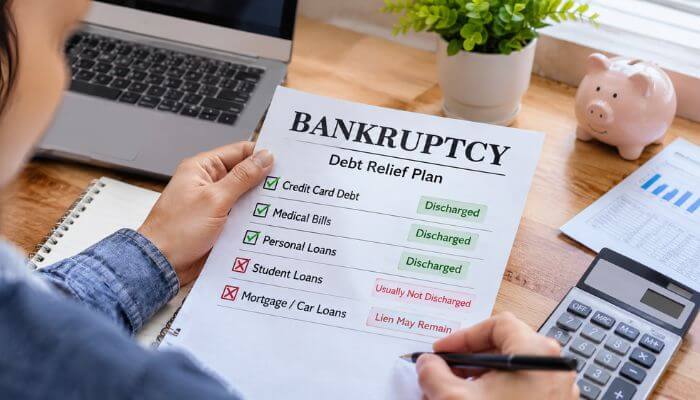
The answer depends on the bankruptcy chapter, the debt’s legal character, and possible creditor objections. This table summarizes typical treatment, not guaranteed results.
| Debt | General treatment |
|---|---|
| Credit cards and medical bills | Often dischargeable |
| Unsecured personal loans | Often dischargeable |
| Mortgage or car loan | Personal liability may change; valid liens may survive |
| Child support and alimony | Generally not dischargeable |
| Student loans | Usually require a separate undue-hardship determination |
| Certain taxes | May survive depending on tax type and filing history |
| Fraud-related debts | May survive, sometimes after creditor litigation |
Student Loans Are Not Automatically Excluded Forever
Many student loans require an additional court proceeding to establish undue hardship before discharge. But saying they can never be discharged is inaccurate. The Justice Department and Education Department developed a standardized approach for federal student-loan bankruptcy cases, including an attestation process. The Justice Department’s guidance, updated March 17, 2026, describes that procedure. Approval still depends on the facts and the court.
Tax Debts Require an Individual Review
Some income taxes may be dischargeable, whereas many recent taxes, unfiled-return liabilities, trust-fund taxes, and certain other obligations can survive. Timing rules are technical: return due dates, actual filing dates, assessments, and prior collection proceedings matter. The IRS Bankruptcy Tax Guide outlines these exceptions. Someone owing $20,000 to the IRS should not treat that balance as dischargeable merely because it is several years old.
Chapter 7 vs. Chapter 13 Bankruptcy
People searching what is a bankruptcy often want to understand the difference between Chapter 7 and Chapter 13. Both offer debt relief, but their requirements and outcomes differ.
| Feature | Chapter 7 | Chapter 13 |
|---|---|---|
| Approach | Liquidation of nonexempt assets | Court-approved repayment plan |
| Timeline | Discharge often in about 4 months | Plan generally lasts 3–5 years |
| Property | Nonexempt assets may be sold | Property generally retained if plan terms are met |
| Eligibility | Income and other legal requirements | Regular income and repayment ability |
- Chapter 7 can discharge many unsecured debts. Although a trustee may sell nonexempt property, most individual Chapter 7 cases have no assets available for distribution to unsecured creditors.
- Chapter 13 allows eligible individuals with regular income to repay debts over three to five years. It may help homeowners catch up on missed mortgage payments, provided they maintain required payments.
How Much Debt Can Bankruptcy Eliminate?
Consider this hypothetical example:
| Debt Type | Balance |
|---|---|
| Credit cards | $24,000 |
| Medical bills | $16,000 |
| Student loans | $30,000 |
| Secured car loan | $14,000 |
| Total | $84,000 |
If the borrower qualifies for Chapter 7 and the credit card and medical debts are discharged, $40,000 could be eliminated—approximately 48% of the total debt.
Student loans require separate discharge analysis, while a car lender may retain rights against the vehicle.
The important question is whether the borrower can afford remaining obligations after bankruptcy. Eliminating debt may provide substantial relief, but it does not automatically solve ongoing income or spending problems.
Note: This example is illustrative, not an actual bankruptcy case.
Will You Lose Your House, Car, or Retirement Savings?
Not necessarily. Bankruptcy exemption laws protect certain property, but their availability and dollar limits depend on the applicable jurisdiction and other rules. Some states permit a choice between federal and state exemption systems; others do not.
For example, a home valued at $250,000 with a $230,000 mortgage has $20,000 in gross equity, before sale expenses and other adjustments. Whether that equity is exempt depends on the applicable law. The same analysis applies to vehicle equity, savings, and property used for work. Many qualifying retirement accounts receive significant legal protection, but account type and circumstances must be checked.
Do not transfer assets to relatives or conceal property in an attempt to keep it out of a bankruptcy case. Such conduct can create serious consequences, including loss of discharge. Obtain legal advice before selling, gifting, or refinancing valuable assets.
What Happens After Filing Bankruptcy?
For most individual filers, the process follows a recognizable sequence:
- Financial inventory: Gather income records, tax returns, loan statements, asset values, lawsuits, and household expenses. All required debts and assets must be disclosed.
- Credit counseling: Complete a qualifying session with an approved provider before filing, generally within the preceding 180 days, subject to limited exceptions.
- Petition and review: File schedules and other documents. A trustee is appointed and the debtor normally attends a meeting of creditors, sometimes called the 341 meeting.
- Chapter-specific obligations: A Chapter 13 debtor follows the payment plan; a Chapter 7 debtor cooperates with the trustee’s asset review.
- Debtor education and discharge: Complete the separate required financial-management course and satisfy applicable conditions before discharge.
The U.S. Trustee Program explains the two education requirements. Filing alone does not guarantee discharge: a case may be dismissed or discharge denied for specified reasons.
Bankruptcy Costs, Credit Scores, and Tax Consequences
Filing for bankruptcy involves expenses and long-term financial consequences that borrowers should understand before proceeding.
- Filing fees: Standard federal court fees are $338 for Chapter 7 and $313 for Chapter 13. Attorney fees and required education costs are additional. Eligible applicants may qualify for fee waivers or installment payments.
- Credit impact: Chapter 7 bankruptcy can remain on credit reports for up to 10 years, while Chapter 13 generally remains for seven years. Future borrowing costs and approvals depend on the individual’s credit history.
- Tax consequences: Debts discharged in bankruptcy are generally excluded from federal taxable income, although reporting requirements and other tax adjustments may apply. Debt forgiven outside bankruptcy can sometimes be taxable.
How Bankruptcy Affects Business Owners
Bankruptcy can affect business owners differently depending on their company’s legal structure and financial obligations.
Sole proprietors are generally personally responsible for business debts. LLC and corporate owners ordinarily have separate legal liability, but personal loan guarantees may still expose their finances.
Chapter 7 can liquidate a struggling business, while Chapter 11 may allow eligible companies to restructure debts and continue operating. However, bankruptcy does not automatically eliminate an owner’s personal guarantees or resolve an unprofitable business model.
Before filing, business owners should review personal guarantees, tax liabilities, secured loans, and operating cash flow.
When Bankruptcy May Not Be the Best Option
Bankruptcy may provide limited relief when most debts cannot be discharged or when borrowers can realistically manage repayments through other arrangements.
Possible alternatives include:
- Credit counseling: Nonprofit agencies may help borrowers create manageable debt repayment plans.
- Lender hardship programs: Creditors may offer temporary payment reductions or revised terms.
- Debt settlement: Negotiating a lower balance may help in some situations, but fees, credit damage, lawsuits, and possible taxes are risks.
Compare total costs, repayment affordability, and property risks before choosing an option. The Consumer Financial Protection Bureau provides guidance on these alternatives.
A Decision Checklist Before You Speak to an Attorney
Bring a complete list of creditors and ask these four questions:
- Which balances are dischargeable? Separate unsecured debts from support, taxes, student loans, and secured claims.
- What could I lose? Calculate equity and identify exemptions that apply in your state.
- What can I afford afterward? Build a conservative budget covering essentials and surviving obligations.
- What are the alternatives? Compare a realistic negotiated plan, Chapter 7 eligibility, and Chapter 13 affordability.
Ask the attorney to identify the assumptions behind the recommendation and the risks if income falls or a creditor objects. The U.S. Courts strongly recommend qualified legal advice, because filing mistakes can affect property and long-term legal rights.
Conclusion
Understanding what is a bankruptcy means recognizing that it can eliminate certain debts but cannot guarantee complete financial freedom. While bankruptcy may provide relief from credit card balances, medical bills, and other qualifying obligations, some debts and secured creditor rights can remain.
Before filing, individuals and business owners should evaluate their outstanding debts, available income, property risks, and repayment alternatives. Knowing what is a bankruptcy and how different chapters work can help borrowers make informed decisions rather than expecting every financial obligation to disappear.
Ultimately, bankruptcy can offer a path toward financial recovery when used appropriately. Reviewing the available options and consulting a qualified bankruptcy attorney can help determine whether filing is the right choice for your circumstances.
FAQs About What Is a Bankruptcy
1. What Is a Bankruptcy and Will Your Employer Find Out?
Bankruptcy filings are generally public court records, but employers are not automatically notified in every case. Certain wage-deduction arrangements or employment circumstances may reveal the filing.
2. What Is a Bankruptcy and Can You Still Rent an Apartment?
Yes. Bankruptcy does not legally prevent you from renting an apartment. However, landlords may review credit reports and consider bankruptcy history when evaluating rental applications.
3. What Is a Bankruptcy and How Does It Affect a Co-Signer?
Bankruptcy generally does not eliminate a co-signer’s responsibility for a shared debt. Chapter 13 may provide temporary co-debtor protection for certain consumer debts, subject to legal exceptions.
Disclaimer: This article explains general U.S. bankruptcy principles as of November 2, 2026. It is educational information, not personalized legal, financial, or tax advice. State exemptions, debt eligibility, court orders, and individual facts may change the outcome.

Source: Cosmo Politian