




Suppose you’ve placed your first inventory order with an overseas supplier: forty cartons of kitchenware, ready at the factory in three weeks, headed for a rented warehouse in Ohio. You ask for shipping help and receive an attractive quote.
It covers ocean freight between ports but says nothing about factory pickup, customs clearance, or the truck to Ohio. Before comparing prices, you need to know which parts of the journey each quote covers.
Key takeaways
- Write one shipment brief: Every provider should quote the same job.
- Verify who will handle your shipment: Confirm the legal entity, relevant licensing, and customs broker.
- Compare the full shipping scope: Check exclusions before comparing totals.
Define Your Shipment Before You Shortlist
A freight forwarder coordinates the move. Depending on the agreed service, it books space with the carrier, arranges pickup and delivery, and manages shipment paperwork.
The carrier is the shipping line, airline, or trucking company that physically moves the goods. Customs entry is a separate task.
The International Trade Administration explains that customs brokers are licensed and regulated by US Customs and Border Protection (CBP). Some forwarders employ licensed brokers; others use a partner. Ask which applies.
The same agency explains Incoterms, the internationally recognized rules that define buyer and seller responsibilities. Agree on the term with your supplier before requesting quotes. It helps establish which transport tasks you need the forwarder to handle.
Build one shipment brief: Put the following on a single page and send it to every provider: product description, origin and destination addresses, cargo-ready date, number of packages, dimensions, weight, declared value, expected shipping frequency, delivery deadline, and agreed Incoterm. A shared brief makes differences and omissions easier to spot.
Match the service to the shipment: If your load doesn’t fill a container, you may be offered less-than-container-load (LCL) shipping, where your goods share a container with other shippers’ cargo. Ask how consolidation affects handling, total cost, and transit time rather than assuming it will be cheaper or faster.
Navia’s sea freight page says it consolidates cargo with other compatible shipments and manages the documentation. For each proposal, check whether it covers origin pickup, the international leg, customs support, and final delivery.
Published service overviews can help you build a shortlist of cargo freight forwarders in the USA. Navia describes one partner handling a shipment across the supply chain and states that there is no minimum volume requirement to get started.
Compare that scope with your brief. Its US service page directs prospects to request a quote from its team rather than listing freight rates.
Check the Business Behind the Service
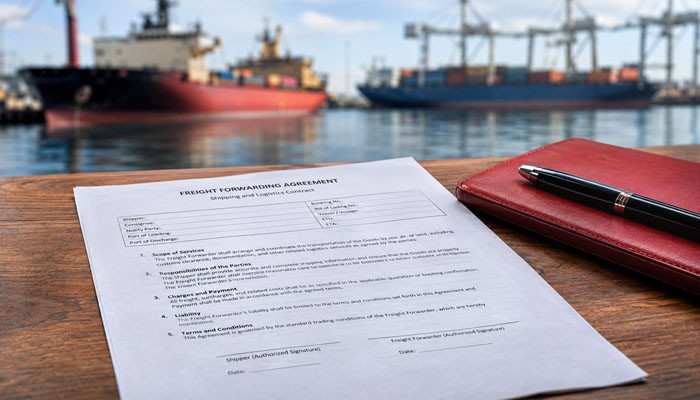
Verify the contracting company: Ask for the exact legal name that will appear on your contract and invoice. For ocean shipments, establish whether the entity acts as an ocean freight forwarder or a non-vessel-operating common carrier (NVOCC), a company that sells ocean transport without operating ships.
The Federal Maritime Commission (FMC) requires US-based businesses operating in these roles to hold its license. It also states that ocean transportation intermediaries must be bonded or maintain other evidence of financial responsibility.
Check the licensing requirement for the service being offered rather than treating an FMC license as a general forwarding credential. The FMC’s licensed NVOCC list contains searchable, downloadable records of active licenses.
Verify the legal name in the relevant official records. Licensing and financial-responsibility checks are separate from evaluating service quality and cargo insurance. Also ask which licensed customs broker will file your entry and whether that broker is in-house or a partner.
The published US service overview for Navia, cargo freight forwarders in the USA is one commercial option to investigate against your brief.
Establish who handles the paperwork: The Small Business Administration states that small businesses remain responsible for the correctness of import and export documentation filed on their behalf. Hiring a forwarder does not transfer that responsibility.
Ask who reviews your documents before dispatch, answers customs questions, and explains product-specific requirements.
The commercial invoice is the bill for the goods from your supplier to you. Keep it separate from the forwarder’s freight quote.
The packing list provides shipment and package details; the International Trade Administration explicitly states that it does not replace the commercial invoice. Have the provider explain any missing or inconsistent information before the cargo moves.
Ask about cargo protection: Confirm whether the quote includes cargo insurance. Trade.gov notes that an insurance certificate can come from a freight forwarder or an insurance carrier.
If you arrange coverage, request the certificate and written terms, including exclusions, the deductible, the claims contact, and the evidence needed to file a claim.
Compare Quotes for the Same Door-to-Door Job
Compare the complete proposal. Use a worksheet with one row per cost item. Not every shipment incurs every charge, but each quote should identify what applies and what remains outside the price.
| Item | Included or excluded | Clarification needed
|
| Pickup and origin handling | Yes/No | Who collects from the supplier? |
| Main freight | Yes/No | Which ports and transport mode? |
| Destination handling | Yes/No | Which arrival charges apply? |
| Customs-broker fee | Yes/No | Which licensed broker? |
| Duties and taxes | Yes/No | Estimated or excluded? |
| Cargo insurance | Yes/No | Coverage amount and deductible? |
| Final delivery | Yes/No | To your door? |
| Storage or delay-related charges | Yes/No | What triggers them? |
| Quote validity and payment terms | Yes/No | How long is the price held, and when is payment due? |
Because Incoterms allocate responsibilities between buyer and seller, the costs that fall to you depend on the agreed term.
Compare proposals using the same responsibilities and delivery scope. If a quote excludes a required service, ask for its cost before comparing totals.
Do not assume a small shipment clears duty-free. CBP’s June 2026 postal rule addresses the suspension of the de minimis exemption and establishes a new entry process for certain mailed merchandise.
Confirm current entry requirements and duty treatment for your shipment by working with a customs broker.
Test the service behind the quote: Ask each provider for a sample tracking view, its update frequency, a named contact, the escalation process, and who acts when a shipment stalls. Compare how the portal supports your work. DHL Global Forwarding, for example, describes access to quotes, shipments, and documents through myDHLi.
Navia says it includes NaviaHub for every customer at no extra charge and describes technology connecting purchase-order management with trackable delivery.
Request a demonstration using your shipment brief so you can see how those functions apply to your needs. Keep included portal access separate from the quoted cost of moving the freight.
When comparing Navia’s proposal with others, use the completed worksheets to identify exclusions and responsibility for each stage.
Before booking, ask the selected provider to confirm the scope, document review, charges, and named contacts in writing.

Source: Cosmo Politian