




Carnegie Mellon is famous for AI, robotics and computer science, but its bigger business story is unfolding beyond the classroom. Research is increasingly being turned into startups, licensed technologies and venture-backed companies built around some of the hardest problems in technology.
More than 400 startups have launched since 2016, and 67 CMU-affiliated companies have reached unicorn status. Behind those numbers is a growing system of researchers, investors, mentors and commercialization programs. Carnegie Mellon is not just creating new technology—it is quietly building the companies that could define what comes next.
Quick Answer
Carnegie Mellon is turning advanced research into startups by connecting founders with funding, intellectual-property support, mentors and commercialization programs. Its growing ecosystem spans AI, robotics, deep tech, healthcare, energy and advanced manufacturing.
Key Takeaways
- Carnegie Mellon reports more than 400 startups launched since 2016 and 67 CMU-affiliated unicorns.
- CMU spent over $727 million on research in fiscal 2025, creating a strong pipeline for commercialization.
- Startups using CMU-licensed intellectual property raised about $2.8 billion over five years.
- VentureBridge has backed 85+ startups, with portfolio companies collectively valued above $1 billion.
- Project Olympus-supported founders have generated more than $1 billion in follow-on funding and 22 exits.
- Carnegie Mellon is expanding its deep-tech ecosystem with $240 million in soft-circled capital and a historic $3 billion investment supporting Pittsburgh and the planned Miami campus.
- The finalized Fall 2025 Carnegie Mellon acceptance rate was approximately 11.1%.
Carnegie Mellon at a Glance
| Metric | Current Picture |
|---|---|
| Main campus | Pittsburgh, Pennsylvania |
| Founded | 1900 |
| Students | 16,582+ |
| Faculty | 1,615+ |
| Startups launched since 2016 | 400+ |
| CMU-affiliated unicorns | 67 |
| FY2025 research expenditures | $727M+ |
| FY2025 licenses, options and agreements | 173 |
| Patents issued over five years | 432 |
| Invention disclosures over five years | 1,478 |
| Capital raised by startups using CMU-licensed IP | $2.8B |
| VentureBridge startups backed since 2018 | 85+ |
| Fall 2025 acceptance rate | About 11.1% |
The numbers show why Carnegie Mellon stands out beyond academics. Its combination of research funding, startup creation, patents and commercial partnerships has created a sizable pipeline from university innovation to real businesses.
Why Carnegie Mellon Is Becoming a Company-Building Engine
Carnegie Mellon is doing more than producing advanced research. It is building a system that helps researchers turn technical ideas into products, startups and investable businesses.
A breakthrough invention alone does not create a successful company. Researchers still need customers, pricing, intellectual-property protection, management talent and access to capital.
That gap between invention and commercialization is where Carnegie Mellon has built an advantage. The Swartz Center for Entrepreneurship connects students, faculty and alumni with competitions, mentoring, customer discovery and deep-tech commercialization support.
Rather than relying on one incubator, CMU has created multiple programs that support founders at different stages of company building.
How Carnegie Mellon Turns Research Into New Companies
Carnegie Mellon spent more than $727 million on research in fiscal 2025, creating a large pipeline of technologies that may eventually reach commercial markets.
| Commercialization Indicator | Five-Year Result |
|---|---|
| Patents issued | 432 |
| Invention disclosures | 1,478 |
| Average industry partnerships per year | 662 |
| Capital raised by startups using CMU-licensed IP | $2.8 billion |
For Carnegie Mellon, commercialization can move through several stages:
- Research and invention
- Intellectual-property evaluation
- Customer discovery
- Licensing
- Startup formation
- Early-stage funding
- Market expansion
Not every invention becomes a startup. Some technologies are licensed to existing companies, while others remain research projects. The important difference is that CMU has infrastructure to evaluate which ideas have commercial potential.
Why Carnegie Mellon’s $727 Million Research Engine Matters
Carnegie Mellon benefits from a research base spanning artificial intelligence, robotics, cybersecurity, energy, biomedical technology and advanced computing.
Research spending does not guarantee startup success, but it increases the pool of potentially valuable technologies. Commercial opportunities can emerge when a technical breakthrough solves an expensive or difficult real-world problem.
Examples include:
- AI research becoming enterprise software
- Robotics technology becoming industrial automation
- Biomedical discoveries becoming health-tech products
- Battery research supporting energy companies
- Cybersecurity research becoming commercial security tools
The advantage for Carnegie Mellon is not simply how much research it funds. It is the system designed to move promising discoveries from laboratories into real markets.
Project Olympus Helps Ideas Find a Market
Project Olympus is one of the earliest entry points into the Carnegie Mellon startup ecosystem. Operating through the Swartz Center for Entrepreneurship, it helps students, faculty, staff and alumni test whether promising ideas can become viable businesses.
Companies supported through the Project Olympus ecosystem have generated more than $1 billion in follow-on funding and produced 22 exits, with Duolingo among its notable success stories.
Its role is especially important because strong technology does not automatically mean strong market demand. Founders still need to identify who needs the product, what problem it solves and whether customers are willing to pay for it.
Customer Discovery Comes Before Scaling
Carnegie Mellon also uses customer discovery to help founders test assumptions before investing heavily in growth.
The Customer Discovery Kickstart program helps early-stage teams speak directly with potential customers and industry participants. As of March 2025, 166 startups had participated since 2022, leading to 22 companies formed and $1.39 million in follow-on funding.
The process encourages founders to answer three questions early:
- Who has the problem?
- How important is the problem?
- Will customers pay for the proposed solution?
The business lesson is simple: validate demand before trying to scale technology.
How Carnegie Mellon Can Benefit When Research Becomes a Startup
When university-owned technology becomes the foundation of a startup, Carnegie Mellon can participate through licensing, royalties or equity.
The Center for Technology Transfer and Enterprise Creation, known as CTTEC, manages technology licensing and helps founders clarify ownership before taking university research into commercial markets.
Published startup licensing terms include:
- 6% university equity for certain exclusive patented-IP licenses
- 2% royalty under the standard exclusive patented-IP framework
- 5% equity for certain non-exclusive patented licenses
- 3% equity for non-patented technologies such as software
- An optional open-source structure with 1% equity
CTTEC reports that 167 direct startups have licensed CMU-owned intellectual property since 2008, while CMU startup companies have raised more than $4.5 billion in venture capital since 2011.
Clear licensing terms matter because investors want to know who owns the underlying technology and whether the startup has the legal right to commercialize it.
Carnegie Mellon Starts Building Companies Before They Are Companies
Carnegie Mellon also supports entrepreneurs before they have mature businesses through programs such as the McGinnis Venture Competition.
The 2026 competition recorded a 70% increase in entries from the previous year. Direct cash investment awards reached $125,000, while the overall package totaled $375,000 when AWS Activate credits were included.
The value extends beyond prize money. Participants can:
- Refine their business model
- Test market assumptions
- Improve investor pitches
- Receive expert feedback
- Build connections with mentors and investors
For an early founder, discovering that a business model needs to change can be more valuable than winning a competition.
VentureBridge Creates a Bridge to Early Capital
VentureBridge gives qualifying Carnegie Mellon founders access to pre-seed investment, mentorship and connections that can help promising companies move toward institutional funding.
Since 2018, VentureBridge has backed more than 85 startups, with portfolio companies collectively valued above $1 billion.
Its portfolio spans areas such as:
- Artificial intelligence
- Robotics
- Healthcare technology
- Telecommunications
- Advanced manufacturing
- Energy
- Industrial technology
- Scientific computing
Many of these startups compete through specialized technology rather than branding alone. That can create stronger barriers to entry, although deep-tech businesses may also require more capital and longer development periods.
VentureBridge therefore fills an important gap between promising university innovation and the larger funding rounds needed to build a scalable company.
Carnegie Mellon Is Making a Bigger Bet on Deep Tech
Deep-tech companies face challenges that ordinary software startups often avoid. Robotics, energy, biotech and advanced-materials businesses may require years of engineering, patents, specialized hardware, testing and significant capital before reaching the market.
Carnegie Mellon responded to that funding gap in April 2026 with its Deep Tech Venture-Ready Program, an 18-month initiative designed to help researchers turn advanced technologies into venture-ready companies.
The program is backed by $240 million in soft-circled capital from 30 venture firms and corporate partners. That capital is not guaranteed investment in participating startups, but it signals investor interest and creates a clearer route between university research and venture funding.
The program focuses on helping researchers strengthen areas investors typically examine:
- Commercial potential
- Market validation
- Business strategy
- Investor readiness
- Company formation
- Venture financing
Rather than waiting for promising technologies to find investors after leaving the laboratory, Carnegie Mellon is bringing researchers and capital together much earlier.
AI Gives Carnegie Mellon an Unusual Business Advantage
Artificial intelligence has been part of the university’s research identity for decades. Herbert Simon and Allen Newell were early AI pioneers, while CMU later developed major academic capabilities in computer science, machine learning and robotics.
That history gives Carnegie Mellon an advantage as AI expands beyond chatbots into robotics, cybersecurity, healthcare, scientific discovery, manufacturing and autonomous systems.
The commercial opportunity is increasingly moving toward areas where AI interacts with specialized industries and physical systems. These markets require more than access to an AI model. They need technical talent, domain expertise, data and engineering.
For Carnegie Mellon, that combination creates opportunities to turn long-standing research strengths into companies serving emerging AI markets.
Where Carnegie Mellon’s Tepper School Fits Into the Startup Machine
Technology alone does not create a sustainable company. Founders still need pricing, finance, operations, supply-chain strategy, sales and an understanding of how to build an organization around a product.
The Tepper School gives Carnegie Mellon a business layer alongside its technical strengths. In the 2026 U.S. News graduate specialty rankings, Tepper placed No. 1 in Information Systems, No. 2 in Business Analytics, No. 5 in Supply Chain/Logistics and No. 10 in Entrepreneurship.
In July 2026, Tepper and the School of Computer Science also launched an AI for Business executive education program focused on turning AI capabilities into measurable organizational value.
This combination matters because tomorrow’s technology companies need leaders who can understand both the technology and the economics behind it.
Robotics May Be Carnegie Mellon’s Most Important Physical-AI Advantage
The Robotics Institute was launched in 1979 and became the world’s first academic department devoted to robotics. Its work has since expanded across autonomous systems, manufacturing, computer vision, medical robotics and intelligent machines.
That history positions Carnegie Mellon well for the rise of physical AI, where artificial intelligence operates through machines rather than remaining entirely on a screen.
Commercial opportunities include:
- Autonomous vehicles
- Warehouse robotics
- Industrial automation
- Medical robots
- Intelligent manufacturing systems
- General-purpose robotic platforms
These companies are harder to build than many software startups because founders must solve problems involving hardware, safety, perception, reliability and manufacturing.
For Carnegie Mellon, those technical barriers may also become a competitive advantage. Research depth and specialized engineering knowledge are considerably harder for competitors to reproduce than a basic software feature.
Carnegie Mellon Is Building a Market Around Its Startups
A startup ecosystem needs more than founders. It also requires investors, customers, experienced advisers, technical talent and companies willing to test or buy emerging technologies.
Carnegie Mellon reported an average of 662 industry partnerships per year during the five fiscal years through 2025, creating connections between university research and established businesses.
Its broader corporate relationships include companies such as Amazon, Bosch, Google, Microsoft, NVIDIA, PNC and PwC.
CMU Startup Week 2026 brought together more than 3,000 founders, investors, researchers, students, alumni and corporate and ecosystem partners, with more than 40 events focused on entrepreneurship and emerging technology.
Those connections can create a powerful cycle:
- Researchers meet potential business partners.
- Founders gain access to investors and advisers.
- Companies encounter emerging technologies.
- Startups find customers and specialized talent.
- Successful alumni return as mentors and investors.
Each connection makes the Carnegie Mellon startup ecosystem more useful to the founders who come next.
Companies That Show the Carnegie Mellon Model Actually Works
Several companies show how Carnegie Mellon research and technical talent can move into real businesses:
- Duolingo — Founded by Luis von Ahn and Severin Hacker, Duolingo grew from a CMU-linked project into a publicly traded language-learning company.
- Aurora — Founded by Chris Urmson, Aurora reflects CMU’s long-standing strength in autonomous vehicles and robotics.
- Skild AI — Co-founded by CMU Robotics Institute faculty members Deepak Pathak and Abhinav Gupta, Skild AI is developing foundation models for robotics and physical AI.
These companies show how Carnegie Mellon can influence business creation through research, technical talent, entrepreneurship programs and commercialization.
Outside Data Shows Carnegie Mellon’s Founder Network Extends Beyond CMU Programs
Independent data shows that the university’s entrepreneurial influence extends well beyond startups created directly through campus programs.
PitchBook’s 2026 graduate-founder analysis ranked the university No. 17 globally, identifying:
- 1,129 graduate founders
- 935 venture-backed companies
- $81.4 billion in capital raised
For Carnegie Mellon, these figures show two paths to business creation: startups built directly from university research and companies later founded by people who developed their technical or entrepreneurial skills at CMU.
The Focus Is Moving Beyond Apps to Frontier Industries
The next startup cycle may look very different from the mobile-app and consumer-platform boom. Carnegie Mellon is positioned in sectors where advanced software increasingly meets science, engineering and physical systems.
Key areas include:
- Artificial intelligence
- Robotics and autonomous systems
- Cybersecurity
- Biomedical technology
- Energy
- Advanced manufacturing
- AI-assisted scientific discovery
These industries often require more capital and longer development cycles, but their reliance on intellectual property, specialized talent and difficult engineering can also create stronger barriers to competition.
A $3 Billion Investment Could Expand the Carnegie Mellon Model
In September 2026, Carnegie Mellon announced a historic $3 billion gift from Citadel founder and CEO Ken Griffin, described by the university as the largest individual philanthropic gift in higher-education history.
The investment includes:
- $1 billion for Pittsburgh
- $500 million of that amount for the School of Computer Science
- $2 billion to launch CMU Miami
- A planned 35-acre campus in Wynwood
- Industry research laboratories and venture studios
- First student enrollment targeted for 2028, subject to approvals
The Miami campus is planned to eventually support more than 3,500 students, nearly 300 faculty and over 600 staff.
Connecting Pittsburgh’s research strength with Miami’s entrepreneurial, financial and international business networks could give future founders easier access to talent, investors, corporate partners and new markets.
Carnegie Mellon University
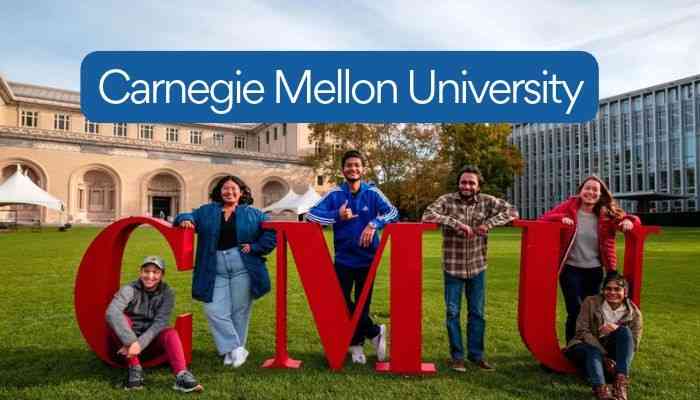
Carnegie Mellon University is a private research institution based in Pittsburgh, Pennsylvania. Its origins date to 1900, when Andrew Carnegie founded the Carnegie Technical Schools.
Carnegie Tech merged with the Mellon Institute of Industrial Research in 1967, creating the modern university.
Today, CMU operates across computer science, engineering, business, science, public policy, design, humanities and the arts.
That interdisciplinary structure matters for entrepreneurship because emerging companies increasingly require combinations of:
- Software and artificial intelligence
- Engineering and robotics
- Product design
- Business strategy
- Finance and operations
Bringing those capabilities into one ecosystem can make it easier for technical ideas to develop into commercially viable businesses.
Carnegie Mellon Acceptance Rate
The Carnegie Mellon acceptance rate for the finalized Fall 2025 Pittsburgh campus admission cycle was approximately 11.1%.
| Fall 2025 Admissions | Number |
|---|---|
| First-year applicants | 34,867 |
| Students admitted | 3,859 |
| Full-time students enrolled | 1,804 |
| Acceptance rate | About 11.1% |
The figures demonstrate how selective admission is, although an overall university rate should not be treated as an individual applicant’s probability of acceptance. Competitiveness can differ by program and applicant pool.
Carnegie Mellon University Acceptance Rate
The Carnegie Mellon University acceptance rate can vary across websites because many sources use data from different admission cycles.
For the most reliable comparison, the finalized Fall 2025 Common Data Set gives an overall Pittsburgh campus rate of approximately 11.1%.
For Fall 2026, CMU reported receiving more than 33,000 first-year applications and welcoming 1,877 first-year students. Because a finalized total-admitted figure has not been provided in the same data, those numbers should not be used to calculate a new acceptance rate.
Keeping admission years clearly separated prevents outdated or mismatched statistics from misleading readers.
Where Is Carnegie Mellon?
People searching where is Carnegie Mellon are usually looking for its main campus in Pittsburgh, Pennsylvania.
Carnegie Mellon is located at:
- 5000 Forbes Avenue
- Pittsburgh, Pennsylvania 15213
Beyond Pittsburgh, CMU has operations or academic locations including Silicon Valley, Qatar and Rwanda, while the planned Miami campus will further expand its footprint.
Pittsburgh also plays an important role in the university’s business story. The region has developed a strong AI, robotics and technology ecosystem supported by research institutions, technical talent and startups.
CMU estimates its activities generate about $3 billion in economic impact across Pennsylvania and support more than 19,600 jobs statewide.
For technology entrepreneurs, Pittsburgh offers access to specialized researchers, engineers and emerging companies without requiring every startup to operate from Silicon Valley.
Why Investors May Watch Carnegie Mellon More Closely
Venture investors typically look for strong founders, differentiated technology, defensible intellectual property and markets capable of supporting substantial growth.
Carnegie Mellon sits close to the beginning of that process because researchers are developing technologies long before many of them become commercial products.
Its startup pipeline includes:
- Project Olympus for early validation
- CTTEC for intellectual-property and licensing support
- VentureBridge for early-stage capital and acceleration
- Deep Tech Venture-Ready Program for investor preparation
- Industry and investor connections for commercialization
Not every university startup will succeed, but the ecosystem can give investors an early look at technologies that may eventually become scalable businesses.
What Business Leaders Can Learn From Carnegie Mellon
The Carnegie Mellon model offers practical lessons for companies trying to turn innovation into commercial growth:
- Build a system around innovation — Ideas need testing, funding and execution.
- Validate customers early — Strong technology still needs real market demand.
- Match capital to the business — Robotics and deep tech often require more patience than software.
- Clarify intellectual property — Ownership should be clear before major financing or expansion.
- Combine technical and business talent — Engineering alone does not create a scalable company.
- Build an ecosystem — Founders, investors, customers and mentors become more valuable when connected.
The broader lesson is that innovation becomes more powerful when organizations create a repeatable path from idea to market.
What Carnegie Mellon Still Has to Prove
Large research budgets, unicorn counts and startup valuations do not automatically translate into durable businesses.
Carnegie Mellon startups and spinouts still face many of the same risks as other technology companies:
- High development and manufacturing costs
- Long deep-tech commercialization cycles
- Healthcare and regulatory barriers
- Expensive robotics deployment
- Rapidly changing AI competition
- Complex university licensing arrangements
- Pressure to convert valuations into sustainable revenue
A billion-dollar valuation does not necessarily mean a company is profitable or commercially secure. Venture valuations can rise or fall significantly between funding rounds.
The stronger test will be whether these companies can create lasting products, customers, jobs and competitive advantages after moving beyond the university environment.
Why Carnegie Mellon’s Next Decade Could Matter More Than Its Last
Several major technology shifts are moving directly toward Carnegie Mellon strengths in AI, robotics, engineering and scientific research.
The biggest opportunities include:
- AI for science and engineering
- Physical AI and robotics
- Autonomous transportation
- Cybersecurity
- Advanced manufacturing
- Energy technology
- Computational healthcare and biology
These markets require more than simple consumer applications. They depend on specialized engineering, research, intellectual property and technical talent.
That combination could make the university’s research-to-business model increasingly important as the next generation of technology companies moves from software alone toward AI-powered machines, scientific discovery and advanced industrial systems.
Conclusion
Carnegie Mellon is no longer just producing breakthrough research. It is building the infrastructure that can turn AI, robotics and deep-tech ideas into investable companies with real commercial potential.
The bigger story is the system behind those companies: research, intellectual property, customer validation, early capital and investor access working together. With more than 400 startups launched since 2016, 67 affiliated unicorns and billions of dollars flowing through its innovation ecosystem, the model is already producing measurable results.
The next test is scale. As AI moves into robotics, healthcare, energy and advanced manufacturing, Carnegie Mellon is positioned close to the technologies that could shape the next generation of businesses.
The university’s real competitive advantage may not be any single invention. It may be its ability to repeatedly turn difficult technical ideas into companies the market is willing to fund, adopt and grow.
FAQs About Carnegie Mellon
1. Can Carnegie Mellon students study entrepreneurship without majoring in business?
Yes. Carnegie Mellon offers entrepreneurship courses and an Innovation and Entrepreneurship minor that students from different academic backgrounds can pursue.
2. Does Carnegie Mellon offer an entrepreneurship minor?
Yes. Carnegie Mellon offers an Innovation and Entrepreneurship minor covering venture creation, funding, commercialization and product development.
3. Can Carnegie Mellon alumni still get startup support?
Yes. Carnegie Mellon entrepreneurship programs serve alumni as well as current students, faculty and staff, while VentureBridge includes alumni-founded startups.
4. Does Carnegie Mellon provide makerspaces for startup founders?
Yes. Carnegie Mellon provides access to prototyping and fabrication resources, including makerspaces associated with Project Olympus and IDeATe.
5. Can Carnegie Mellon researchers join VentureBridge?
Yes. Carnegie Mellon VentureBridge supports faculty, PhD researchers, students and alumni through funded startups and its Fellows programs.
6. Does Carnegie Mellon support startups outside Pittsburgh?
Yes. Carnegie Mellon VentureBridge uses hybrid programming and connects founders through activities in Pittsburgh, New York and the San Francisco Bay Area.
7. Does Carnegie Mellon offer entrepreneurship courses for engineers?
Yes. Carnegie Mellon offers entrepreneurship courses designed for engineers, computer scientists and scientists, alongside broader startup education.
8. Can companies work with Carnegie Mellon students on innovation projects?
Yes. Carnegie Mellon runs project-based programs where graduate student teams can work with companies to test markets, business models and new growth opportunities.
The post Carnegie Mellon Is Quietly Building the Next Generation of Companies first appeared on Tycoonstory Media.
Source: Cosmo Politian