




A squeaky door can disturb sleep, interrupt quiet rooms, and make an otherwise well-maintained home feel neglected. If you’re wondering how to fix squeaky door problems, the good news is that the noise usually comes from a dry, dirty, loose, or misaligned hinge—and most homeowners can solve it without removing the entire door.
Although a squeaky door is usually a minor problem, the sound often signals increasing friction or movement inside the hinge. Addressing the cause early can prevent additional wear, improve the way the door operates, and reduce the chance of needing more extensive repairs later.
If you are searching for how to fix squeaky door problems permanently, begin with the simplest repair: identify the noisy hinge, tighten its screws, and apply a suitable lubricant. When lubrication alone does not work, cleaning the hinge pin, repairing loose screw holes, correcting alignment, or replacing a damaged hinge can provide a longer-lasting solution.
This guide explains seven easy DIY methods, which products work best, what mistakes to avoid, and how to determine whether the sound is actually coming from the hinges.
Key Takeaways
- Most squeaky doors are caused by dry hinge parts, loose screws, trapped dirt, corrosion or minor misalignment.
- Begin by identifying the noisy hinge, tightening its screws and applying a small amount of suitable lubricant.
- Silicone spray or light machine oil works well for many interior hinges, while white lithium grease may suit heavier metal-to-metal applications.
- Replace the hinge when it is bent, cracked, deeply corroded or badly worn.
Squeaky Door Repair at a Glance
If you want the quickest solution, use this table before starting repairs.
| Problem | Best First Fix |
|---|---|
| Dry hinge | Apply a small amount of silicone spray or light machine oil. |
| Loose hinge screws | Tighten all hinge screws before adding lubricant. |
| Rusty hinge pin | Remove, clean, lubricate, and reinstall the pin. |
| Door rubbing the frame | Check hinge alignment and door clearance. |
| Bent or cracked hinge | Replace the damaged hinge with a matching model. |
Working through the simplest repairs first often solves the problem without replacing hardware or making permanent adjustments.
Quick Answer: How Do You Fix a Squeaky Door?
If you’re wondering how to fix squeaky door problems quickly, follow these simple steps:
- Open and close the door slowly to identify the noisy hinge.
- Tighten every visible hinge screw.
- Protect the floor with a cloth or paper towel.
- Apply a small amount of silicone spray, light machine oil, or white lithium grease to the hinge pin and moving joints.
- Move the door back and forth several times.
- Wipe away excess lubricant.
If the squeak returns, remove one hinge pin at a time, clean off rust and dirt, lubricate it, and reinstall it. Replace the hinge if it is bent, heavily corroded, cracked, or badly worn.
What Causes a Door to Squeak?
Understanding the cause is the first step in learning how to fix squeaky door problems. A door usually squeaks when friction develops between moving hinge components. The hinge pin rotates inside several interlocking metal sections called knuckles. When these surfaces become dry or dirty, they rub together and produce noise.
Common causes include:
- Dried or insufficient hinge lubricant
- Dust, paint, hair, or grime inside the hinge
- Loose hinge screws
- Rust or corrosion on the hinge pin
- A bent or worn hinge
- Stripped screw holes
- A sagging or misaligned door
- The door rubbing against its frame, threshold, or weatherstripping
- A loose door sweep scraping the floor
- Poorly aligned hinges creating uneven pressure
Identifying the cause before applying a repair helps prevent the squeak from returning.
Squeaky Door Diagnosis: Match the Sound to the Problem
Different sounds can point to different door problems. Use this table to identify the likely cause before choosing a repair.
| Sound or symptom | Likely cause | Best first step |
| High-pitched squeak throughout the swing | Dry hinge pin or hinge knuckles | Apply silicone spray or light machine oil |
| Grinding or crunching sound | Rust, dirt or metal wear inside the hinge | Remove, clean and inspect the hinge pin |
| Creak or pop near the closed position | Hinge binding, paint buildup or misalignment | Tighten the screws and inspect hinge alignment |
| Scraping at one point in the swing | Door edge, sweep or weatherstripping rubbing | Find the contact point and correct the obstruction |
| Clicking near the latch | Loose or misaligned latch and strike plate | Tighten and inspect the latch hardware |
| Door drops slightly when opened | Loose screws, stripped holes or worn hinges | Repair the screw holes and inspect the hinges |
| Squeak returns soon after lubrication | Dirt, corrosion or damaged hardware | Clean the pin thoroughly or replace the hinge |
A squeak usually indicates friction inside a hinge. Grinding, scraping, clicking or popping may point to rust, alignment problems or contact elsewhere around the door.
Before you begin how to fix squeaky door problems, gather the basic tools and materials needed for a safe and effective repair.
Most repairs require only basic household tools:
- Phillips or flat-head screwdriver
- Hammer or rubber mallet
- Nail, punch, or narrow screwdriver
- Clean cloths or paper towels
- Silicone spray
- Light machine oil
- White lithium grease
- Petroleum jelly
- Fine steel wool or a small wire brush
- Mild household cleaner
- Wood glue and wooden toothpicks
- Replacement hinge screws
- Replacement hinges
- Work gloves
- Safety glasses
You will not need every item. Start with a screwdriver, cloth, and appropriate lubricant before attempting more advanced repairs.
Project Overview
| Project detail | Typical requirement |
| DIY difficulty | Beginner for lubrication; intermediate for alignment or hinge replacement |
| Time required | 5–20 minutes for a simple repair; up to 60 minutes for deeper repairs |
| Typical cost | Low when basic tools and lubricant are already available |
| Main skills needed | Tightening screws, applying lubricant and handling basic door hardware |
| Professional help | Recommended for heavy, glass, fire-rated or severely misaligned doors |
Most squeaky doors can be fixed without removing the entire door. Begin with tightening and lubrication before attempting alignment changes or buying replacement hardware.
How This Guide Was Researched
This guide was prepared to provide accurate and practical information on how to fix squeaky door problems using a lowest-risk-first repair process. It begins with diagnosis and basic screw tightening before moving to lubrication, hinge-pin cleaning, alignment correction, stripped-hole repair and hardware replacement.
The recommendations were checked against established home-maintenance guidance and general lubricant-manufacturer instructions. Product labels and hinge-manufacturer directions should always take priority when they provide model-specific requirements.
The guide distinguishes between a true hinge squeak and similar sounds caused by a rubbing door edge, dragging sweep, compressed weatherstripping, misaligned latch or damaged frame. It also avoids presenting temporary household products as equal replacements for purpose-made hinge lubricant.
Before You Begin: Find the Exact Source of the Noise
Before attempting how to fix squeaky door problems, do not assume every squeak comes from the hinge pin. A door can also make noise when its bottom edge, latch, sweep, or weatherstripping rubs against another surface.
Open and close the door slowly while listening near each hinge. Place a finger lightly against the hinge plate—not between moving parts—to feel for vibration. Ask another person to operate the door when necessary.
Inspect the following areas:
- Each hinge and hinge pin
- The gap between the door and frame
- The bottom of the door
- The threshold or floor
- The door sweep
- Weatherstripping
- The latch and strike plate
A dark rub mark, chipped paint, polished metal area, or uneven gap can reveal where unwanted contact is occurring.
Expert Repair Principle: Treat the Cause, Not Only the Sound
Lubricant can quiet dry metal surfaces, but it will not permanently correct a loose hinge, stripped screw hole, bent pin, damaged hinge leaf or badly misaligned door.
If the squeak returns shortly after lubrication, stop repeatedly spraying the hinge. Clean and inspect the pin, check the screws and door gaps, and look for rust, deformation or rubbing surfaces. Understanding the real cause is an essential part of how to fix squeaky door issues permanently, as a returning noise often indicates that the underlying source of friction remains.
How to Fix Squeaky Door: 7 Effective DIY Methods
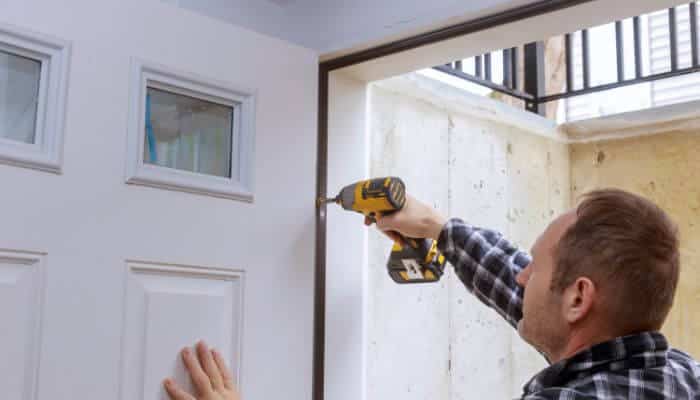
If you want to learn how to fix squeaky door problems permanently, begin with Method 1 and move through each method only when the squeak continues. This step-by-step approach avoids unnecessary disassembly and helps identify the actual problem.
Method 1: Tighten the Hinge Screws
Loose screws allow a hinge plate to shift as the door moves. That movement can create friction, misalign the door, and produce squeaking or creaking sounds.
How to Tighten a Loose Door Hinge
- Open the door far enough to reach every hinge screw.
- Support a heavy door from underneath with a wooden block if it appears to sag.
- Use the correct screwdriver for the screw head.
- Tighten each screw until it is secure.
- Avoid overtightening, which can strip the wood.
- Test the door several times.
Pay particular attention to the top hinge because it carries significant pulling force from the door’s weight.
What if the Screw Keeps Turning?
A screw that spins without becoming tight probably has a stripped hole. Do not install a wider screw immediately without checking the hinge opening. Use Method 6 to repair the damaged screw hole properly.
Method 2: Apply a Suitable Hinge Lubricant
Dry metal-to-metal contact is one of the most common causes of a squeaky hinge. A small amount of lubricant may solve the problem within minutes.
Best lubricants for squeaky door hinges
| Lubricant | Best use | Expected performance |
| Silicone spray | Interior hinges and clean application | Long-lasting and water-resistant |
| Light machine oil | Standard interior door hinges | Penetrates narrow spaces effectively |
| White lithium grease | Heavy doors, exterior hinges and lasting protection | Thick and durable |
| Dry lubricant | Dust-prone locations | Less likely to attract surface dirt |
| Petroleum jelly | Drip-free household alternative | Useful for coating a removed pin |
| Multipurpose penetrating spray | Loosening dirty or rusty components | Helpful as an initial cleaner or quick fix |
For a lasting repair, use a lubricant specifically labelled for hinges or metal moving parts.
Check Material Compatibility Before Applying Lubricant
Traditional steel butt hinges can usually accept light machine oil, silicone lubricant or white lithium grease. However, some modern hinges contain plastic bushings, rubber seals, nylon components or decorative finishes.
Use white lithium grease mainly for suitable metal-to-metal contact. A manufacturer-approved silicone lubricant may be more appropriate when plastic, rubber or vinyl parts are present.
Always read the product label before use. Choosing the right lubricant is an important part of how to fix squeaky door problems safely. Protect nearby paint, wallpaper, woodwork and flooring from drips or overspray, and test the product on an inconspicuous area when surface compatibility is uncertain.
How to Lubricate the Hinge Without Removing the Pin
- Place a cloth beneath the hinge.
- Clean visible dust from the hinge surface.
- Direct the applicator toward the hinge-pin joints.
- Apply one or two small drops or a short spray.
- Open and close the door 10 to 15 times.
- Wipe away excess product.
Apply lubricant gradually. Flooding a hinge creates drips, attracts dirt, and may stain painted surfaces, woodwork, carpet, or clothing.
Which Hinge Should You Lubricate?
Treat the hinge producing the noise first. If you cannot isolate it, apply a small amount to each hinge, starting at the top.
Important: Check the Hinge Type Before Removing the Pin
Not every door hinge has a removable pin. Do not hammer, force or pry the pin if the door uses:
- A non-removable security hinge
- A concealed or invisible hinge
- A sealed ball-bearing hinge
- A continuous or piano hinge
- A spring-loaded self-closing hinge
- A hydraulic or adjustable hinge
- A hinge with a dedicated grease or oil port
Look for a brand name or model number and check the manufacturer’s maintenance instructions before disassembly. Some specialised hinges are sealed, pre-lubricated or designed to be serviced through a specific lubrication point.
Spring-loaded hinges contain stored tension. Do not loosen or alter their adjustment mechanism unless you understand the manufacturer’s procedure.
Method 3: Remove, Clean and Lubricate the Hinge Pin
If an external application does not stop the noise, dirt or corrosion may be trapped inside the hinge. Removing and cleaning the pin allows the lubricant to reach the surfaces where friction occurs, making this an effective step in how to fix squeaky door problems that keep returning.
Safety Tip
Work on only one hinge at a time. Removing every hinge pin simultaneously can allow the door to shift or fall, particularly when it is heavy.
How to Remove and Clean a Hinge Pin
- Close and latch the door when possible.
- Place a nail, punch, or narrow screwdriver against the bottom of the pin.
- Tap it gently upward with a hammer.
- Grip the raised pin and pull it out.
- Wipe the pin with a clean cloth.
- Remove dirt or light rust with fine steel wool.
- Clean the hinge knuckles with a cloth or narrow brush.
- Dry all components thoroughly.
- Coat the pin lightly with machine oil, silicone lubricant, petroleum jelly, or white lithium grease.
- Slide the pin back into place.
- Tap it gently until fully seated.
- Open and close the door to distribute the lubricant.
Repeat the process for the remaining hinges only when necessary.
What if the Hinge Pin Will Not Come Out?
Paint, corrosion, or deformation may be holding it in place. Score thick paint carefully around the pin head with a utility knife, apply a small amount of penetrating product, and allow it to work before trying again.
Do not strike the pin aggressively. Excessive force can bend the pin, damage the hinge, chip paint, or move the door out of alignment. Following these steps carefully will help how to fix squeaky door issues without causing unnecessary damage to the hinge or door.
Method 4: Correct Hinge Binding and Minor Misalignment
Lubrication will not permanently fix a hinge when its parts are under sideways pressure or when a hinge leaf is not seated correctly. This problem is known as hinge binding and may cause squeaking, popping, resistance or uneven gaps around the door. Correcting hinge binding is an important step in how to fix squeaky door problems that continue after lubrication.
How to Check for Hinge Binding
- Close the door and examine the gaps around its top and sides.
- Look for a gap that becomes unusually narrow near one hinge.
- Check whether a hinge leaf sits above the surrounding wood instead of lying flush.
- Inspect the hinge recess for dried paint, loose wood fibres, splinters or debris.
- Open the door slowly and notice whether the sound occurs at only one angle.
- Tighten all hinge screws before making any alignment adjustment.
These checks help identify whether hinge binding, rather than a dry hinge, is the real cause of the noise when learning how to fix squeaky door issues.
How to Correct a Minor Hinge Alignment Problem
- Support the door so its weight does not pull on the loosened hinge.
- Remove paint, debris or splinters trapped behind the hinge leaf.
- Confirm that the hinge sits flat inside its recess.
- If a small gap adjustment is required, loosen the appropriate hinge.
- Insert a purpose-made thin hinge shim behind the hinge leaf.
- Tighten the screws evenly.
- Open and close the door to test the adjustment.
- Add another shim only when a further minor correction is necessary.
Use the thinnest practical shim and make one adjustment at a time. An excessively thick shim or incorrect placement can create additional binding or make the door rub against the frame.
Avoid bending hinge knuckles unless you have suitable experience. Call a professional when the frame is visibly out of square, the door is extremely heavy or the alignment problem is more than minor. Proper hinge alignment is often the lasting solution for how to fix squeaky door problems caused by uneven pressure rather than insufficient lubrication.
Method 5: Remove Rust and Surface Buildup
Lubricant may temporarily hide a squeak, but it cannot fully correct heavy rust, dried paint, or hardened grime inside a hinge. Cleaning the affected parts produces a smoother contact surface and is an important step in how to fix squeaky door problems caused by corrosion.
How to Clean a Rusty Hinge Pin
- Remove one hinge pin.
- Wipe away loose dirt.
- Rub light corrosion gently with fine steel wool or a small wire brush.
- Clean the pin with a suitable household degreaser.
- Dry it completely.
- Inspect it for deep pitting or bending.
- Apply a rust-inhibiting lubricant.
- Reinstall and test the pin.
Replace a deeply corroded pin rather than grinding it excessively. A rough, pitted surface may continue to create friction even after lubrication.
Should You Paint Over a Hinge?
Avoid painting moving hinge joints or the hinge pin. Paint can harden between the knuckles, restrict movement, chip during operation, and contribute to noise.
When painting a door, protect the moving sections of the hinge or remove the hardware first. Keeping the hinge free from rust and paint buildup helps how to fix squeaky door issues last longer and prevents the noise from returning.
Method 6: Repair Loose or Stripped Hinge Screw Holes
When a screw hole is stripped, the hinge cannot remain firmly attached. The door may sag and place uneven pressure on the hinge pin, causing recurring squeaks. Repairing stripped screw holes is an important part of how to fix squeaky door problems that keep coming back.
Toothpick Repair for a Lightly Stripped Hole
- Remove the loose screw.
- Dip one or more wooden toothpicks in wood glue.
- Insert them tightly into the hole.
- Trim them flush with the surface.
- Allow the glue to cure according to its instructions.
- Create a small pilot hole.
- Reinstall the screw without overtightening it.
This method gives the screw fresh wood fibres to grip.
Using a Longer Hinge Screw
In some situations, replacing one jamb-side hinge screw with a longer screw can help secure the hinge more firmly to framing behind the door jamb. However, screw length, placement, wiring, plumbing, door construction, and frame condition must be considered.
Predrill a pilot hole when appropriate to reduce the risk of splitting the wood. Avoid driving a long screw blindly into an unknown wall cavity.
When Is a More Substantial Repair Needed?
Use a wood dowel or professional repair when:
- Several holes are badly enlarged
- The surrounding wood is cracked
- The hinge repeatedly pulls away
- The jamb is soft or water-damaged
- A heavy exterior door is sagging
- Previous temporary repairs have failed
Repairing the underlying screw-hole damage instead of repeatedly tightening loose screws provides a more permanent how to fix squeaky door solution and helps prevent future hinge movement.
Method 7: Replace a Worn or Damaged Hinge
A hinge that is bent, cracked, deeply corroded or badly worn may continue squeaking after tightening, cleaning and lubrication. When the hinge no longer moves smoothly or securely supports the door, replacement is usually more reliable than repeatedly applying lubricant. Replacing damaged hardware is often the final step in how to fix squeaky door problems when simpler repairs no longer work.
Signs That a Hinge Needs Replacement
- The hinge pin is visibly bent
- Hinge knuckles do not line up
- The door drops when opened
- The hinge plate moves despite tight screws
- Rust has deeply damaged the metal
- The hinge leaves metal dust or shavings
- The door repeatedly rubs against the frame
- The squeak returns immediately after cleaning
- The hinge is cracked or pulling apart
These signs indicate that the hinge may be beyond repair and should be replaced as part of how to fix squeaky door issues permanently.
How to Replace a Door Hinge
- Measure the existing hinge height, width, corner shape, thickness, screw pattern, and finish.
- Purchase a compatible replacement with a suitable load rating.
- Close and support the door.
- Replace one hinge at a time.
- Remove the screws from the old hinge.
- Position the new hinge in the existing recess.
- Mark and predrill pilot holes where necessary.
- Install the screws evenly.
- Confirm that the hinge sits flush.
- Test the door’s movement and alignment.
Do not force a mismatched hinge into the existing recess. A hinge that is too thick, thin, large, or incorrectly positioned can change the door gap and create new rubbing problems. Installing the correct replacement hinge helps ensure how to fix squeaky door repairs remain effective for the long term.
How to Test the Door After the Repair
After completing a repair, use this checklist to confirm that the problem has been solved and that your how to fix squeaky door solution has been successful:
- Open the door slowly through its complete range of movement.
- Open and close it again at normal speed.
- Stop the door at the quarter-open and halfway positions.
- Close and latch the door several times.
- Listen for squeaking, grinding, clicking, popping or scraping.
- Confirm that every hinge pin is fully seated.
- Check that the gaps around the door remain reasonably even.
- Make sure the latch enters the strike plate without force.
- Wipe away lubricant that appears after operating the door.
- Recheck the hinge later for fresh drips or returning noise.
If the sound changes from a squeak to grinding, scraping or popping, stop adding lubricant. Inspect the hinge alignment, door frame and hardware condition instead.
What if the Door Still Squeaks After Lubrication?
If lubrication does not solve the problem, how to fix squeaky door issues may require checking for other sources of friction. A continuing noise may not originate inside the hinge. Inspect the following contact points:
1. The Door Rubs Against the Frame
Look for scraped paint, worn wood, or an uneven gap around the door. Tightening or repairing the hinges may raise a slightly sagging door. More severe alignment problems may require hinge adjustment, frame repair, or professional assessment.
2. The Door Sweep Drags on the Floor
A loose or incorrectly positioned sweep may squeak, scrape, or whistle. Tighten, reposition, trim, or replace it according to the manufacturer’s instructions.
3. The Weatherstripping Makes Noise
Rubber or vinyl weatherstripping can squeak when it is dirty, compressed, or incorrectly installed. Clean it with a product compatible with its material and replace damaged sections.
4. The Latch Rubs Against the Strike Plate
If the sound occurs only near the fully closed position, inspect the latch and strike plate. Loose hardware or poor alignment can produce scraping or clicking rather than a true hinge squeak.
5. The Door Is Warped or the Frame Is Uneven
Seasonal moisture changes can cause wooden doors and frames to expand or shift. A door that suddenly rubs, will not latch, or shows severely uneven gaps may need more than lubrication.
How to Fix a Squeaky Door Without WD-40
If you’re looking for how to fix squeaky door problems without WD-40, several household alternatives can reduce hinge noise temporarily. A squeaky door can be fixed without WD-40 or another multipurpose penetrating spray. Silicone lubricant, light machine oil, white lithium grease and petroleum jelly may all help, depending on the hinge material and the type of repair required.
Purpose-made hinge lubricant usually provides a cleaner and longer-lasting result. Household products such as candle wax or bar soap should generally be treated as temporary solutions rather than permanent replacements for proper lubricant.
- Petroleum Jelly: Petroleum jelly is thick, easy to control, and useful when applied directly to a removed hinge pin. Use only a thin layer.
- Paraffin or Candle Wax: Wax may reduce friction temporarily when rubbed onto a clean hinge pin. It is better treated as an emergency option than a permanent repair.
- Bar Soap: A small amount of plain bar soap may quiet a hinge briefly, but it can leave residue and may not perform well in damp conditions.
- Household Cooking Oil: Cooking oil may stop the sound temporarily, but it is not designed as a hardware lubricant. It can become sticky, collect dirt, and create an unpleasant residue. Replace it with a proper lubricant when possible.
Common Mistakes to Avoid
Avoiding these common errors is just as important as learning how to fix squeaky door problems correctly. Even a simple hinge repair can fail when the wrong technique is used.
- Applying Too Much Lubricant: More product does not necessarily produce a better result. Excess oil drips, stains nearby materials, and collects dust.
- Lubricating Without Cleaning: New lubricant can carry dirt deeper into the hinge. Wipe away visible dust and old residue first.
- Removing Every Hinge Pin at Once: This can destabilize the door. Remove and reinstall one pin before moving to the next.
- Overtightening Screws: Excessive force can strip the wood, damage screw heads, or distort a thin hinge plate.
- Ignoring Rust or Physical Damage: Lubrication cannot permanently restore a cracked, severely corroded, or bent hinge.
- Using a Hammer Without Protecting the Finish: A misplaced strike can damage the door, trim, wall, hinge, or paint. Use controlled taps and a correctly positioned punch.
- Assuming the Hinge Is Always Responsible: A scraping sweep, tight weather seal, misaligned latch, or rubbing door edge may produce a similar sound.
How to Prevent Door Hinges From Squeaking Again
Regular preventive maintenance is one of the best ways to support how to fix squeaky door repairs and keep hinges operating smoothly for longer. Preventive maintenance reduces friction and helps door hardware last longer.
- Keep hinges clean and dry.
- Wipe away dust during normal cleaning.
- Lubricate hinges lightly during routine home maintenance.
- Address water leaks and indoor moisture problems.
- Avoid painting hinge pins and moving joints.
- Replace rusted exterior hardware with suitable corrosion-resistant hinges.
- Do not hang heavy items from door handles.
- Correct a sagging door before it damages the hinges or frame.
A lightly used interior door may require little attention, while an exterior, bathroom, kitchen, or frequently used door may need inspection more often.
Suggested Door-Hinge Maintenance Schedule
The following is a practical inspection schedule rather than a universal manufacturer requirement. Adjust it according to door usage, humidity, weather exposure and the hinge manufacturer’s instructions.
| Door type or location | Suggested inspection | What to check |
| Lightly used interior door | Once a year | Loose screws, dust, stiffness and early squeaking |
| Frequently used interior door | Every 6–12 months | Screw movement, dry joints and uneven door gaps |
| Bathroom or laundry-room door | Every 6 months | Moisture, corrosion and swelling around the frame |
| Exterior door | Every 3–6 months | Rust, water exposure, loose hardware and weather damage |
| Heavy or oversized door | Every 3–6 months | Sagging, hinge wear, loose screws and frame movement |
Do not apply lubricant automatically at every inspection. Clean the hinge first and lubricate it only when movement becomes dry, stiff or noisy, unless the manufacturer recommends a fixed service interval.
When Should You Call a Professional?
Although most homeowners can learn how to fix squeaky door problems caused by dry or dirty hinges, professional help may be appropriate when:
- The door is unusually heavy
- The jamb is split, rotten, or pulling away
- The door frame appears warped
- The door suddenly became severely misaligned
- Several hinges are damaged
- A fire-rated door requires repair
- A commercial door has specialised hardware
- Glass panels make the door difficult to handle safely
- Long screws could contact hidden pipes or electrical wiring
- The door will not latch or secure correctly
- DIY repairs have not solved the problem
A carpenter, handyman, locksmith, or door installer can determine whether the issue involves the hinges, slab, frame, threshold, or surrounding structure.
Quick Door Maintenance Checklist
To help keep your doors quiet and operating smoothly:
- Inspect hinges for loose screws.
- Wipe away dust before applying lubricant.
- Use only a small amount of lubricant.
- Check for early signs of rust or corrosion.
- Confirm that the door closes without rubbing.
- Tighten loose hardware before damage becomes worse.
- Replace damaged hinges instead of repeatedly lubricating them.
A few minutes of preventive maintenance each year can help prevent recurring squeaks and extend the life of your door hardware.
Conclusion
Learning how to fix squeaky door problems begins with identifying exactly where the sound originates. Tightening loose screws and applying a suitable lubricant will resolve many cases, but a recurring squeak may require deeper cleaning, rust removal, screw-hole repair, hinge realignment, or replacement.
Start with the least invasive method and test the door after each repair. Use only a small amount of lubricant, work on one hinge at a time, and never ignore severe corrosion, sagging, or frame damage. By following these practical steps, how to fix squeaky door issues becomes a straightforward DIY task that can restore smooth, quiet door movement and help prevent the noise from returning.
How to Fix Squeaky Door FAQS
1. How often should I lubricate door hinges to prevent squeaking?
A. For most interior doors, lubricating the hinges once or twice a year is usually enough. Exterior doors or frequently used doors may require more frequent inspection and lubrication because of weather exposure and heavier daily use.
2. Can temperature changes cause a squeaky door?
A. Yes. Changes in temperature and humidity can cause wooden doors and frames to expand or contract, increasing pressure on the hinges and creating squeaking or rubbing noises.
3. Can new door hinges squeak?
A. Yes. Even new hinges can squeak if they are installed incorrectly, lack proper lubrication, or become contaminated with dust, paint, or construction debris during installation.
4. Why does my door squeak only when opening but not when closing?
A. A squeak that occurs only in one direction often indicates uneven pressure on a specific hinge, minor misalignment, or friction that appears only at a certain point in the door’s swing.
5. Is it safe to lubricate painted door hinges?
A. Yes, but avoid excessive lubricant that can stain painted surfaces. Wipe away any excess immediately and avoid allowing paint to build up inside the hinge joints.
6. Can loose door hinges damage the door frame?
A. Yes. Loose hinges allow the door to sag over time, placing extra stress on the frame, screw holes, and latch, which can eventually require more extensive repairs.
7. Should I replace all door hinges at the same time?
A. Not necessarily. Replace only the damaged hinge unless the remaining hinges show significant wear, rust, bending, or no longer match the replacement hardware.
8. Does a squeaky door always mean the hinge is damaged?
A. No. In many cases, the hinge is simply dry or dirty. However, repeated squeaking after cleaning and lubrication may indicate wear, corrosion, misalignment, or another underlying problem that requires repair.

Source: Cosmo Politian